draw 2d and 3d shapes
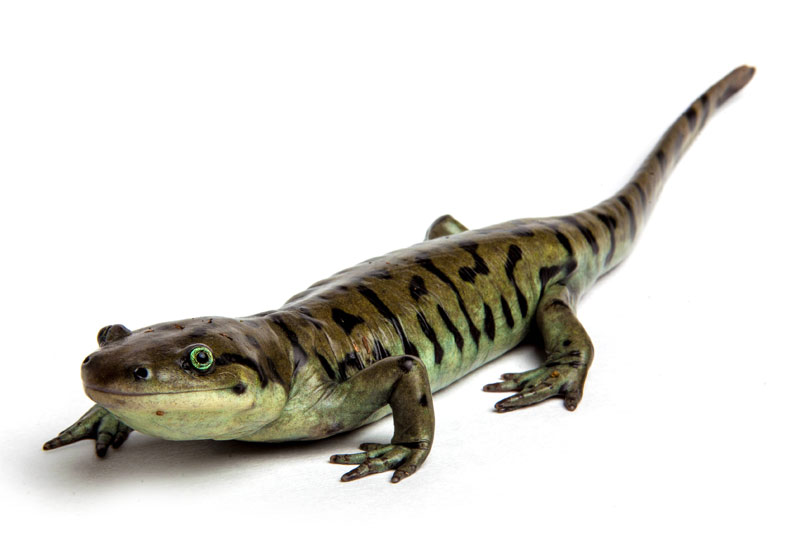
Drawing is an art of illusion—flat lines on a flat sail of paper wait similar something real, something full of depth. To attain this consequence, artists use special tricks. In this tutorial I'll prove you lot these tricks, giving you the key to drawing 3 dimensional objects. And we'll do this with the help of this beautiful tiger salamander, as pictured by Jared Davidson on stockvault.
Why Certain Drawings Look 3D
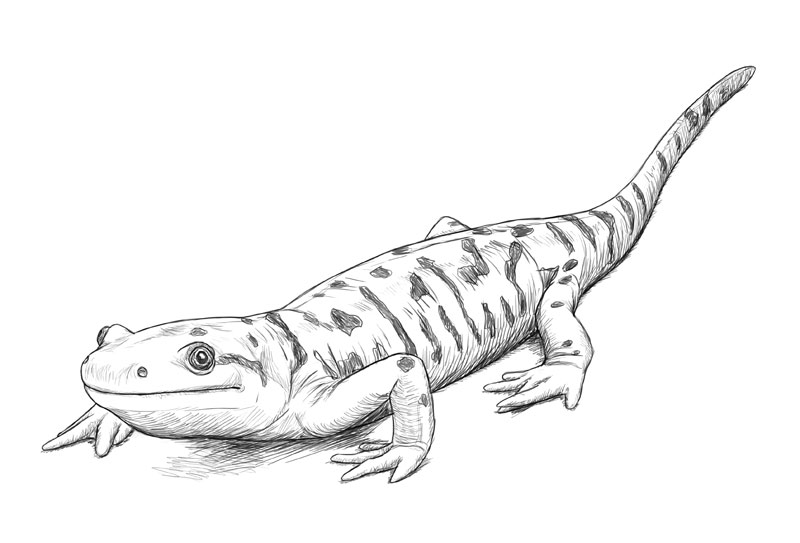
The salamander in this photograph looks pretty iii-dimensional, correct? Allow's plow information technology into lines now.
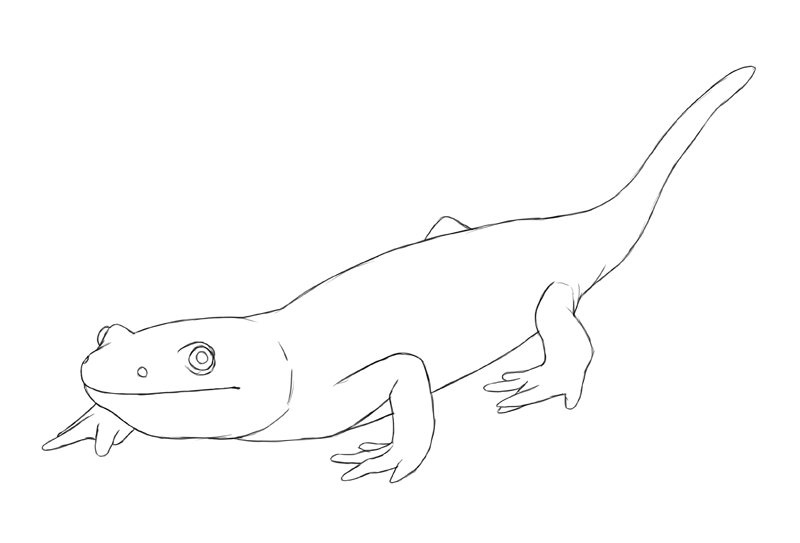
Hm, something's wrong here. The lines are definitely right (I traced them, after all!), but the drawing itself looks pretty flat. Sure, information technology lacks shading, only what if I told you that you can draw three-dimensionally without shading?
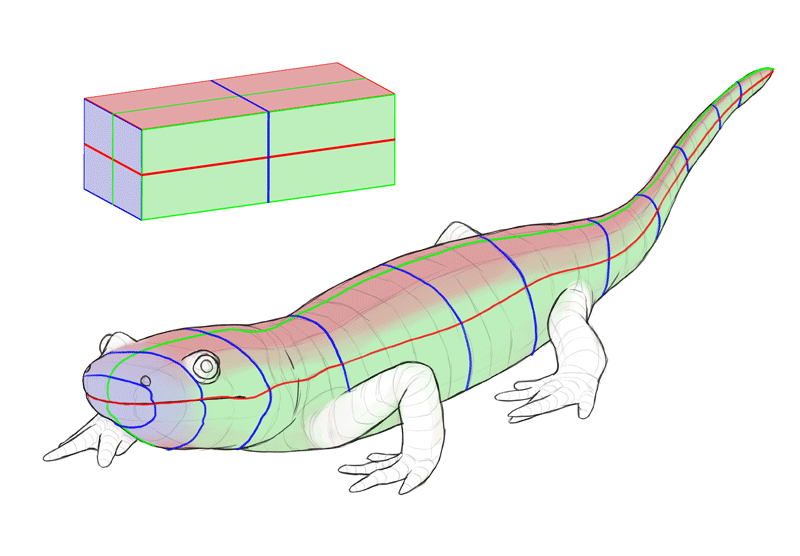
I've added a couple more lines and… magic happened! Now it looks very much 3D, maybe fifty-fifty more than the photograph!
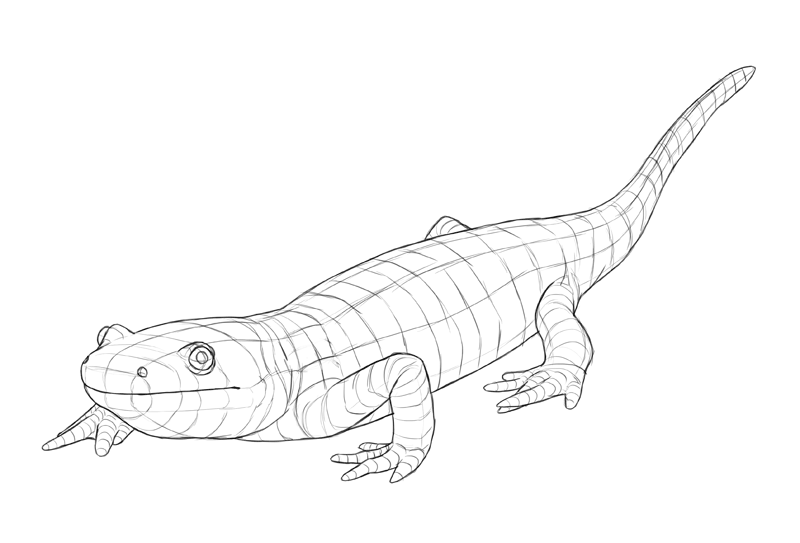
Although you don't see these lines in a last drawing, they affect the shape of the pattern, skin folds, and fifty-fifty shading. They are the key to recognizing the 3D shape of something. Then the question is: where practice they come up from and how to imagine them properly?
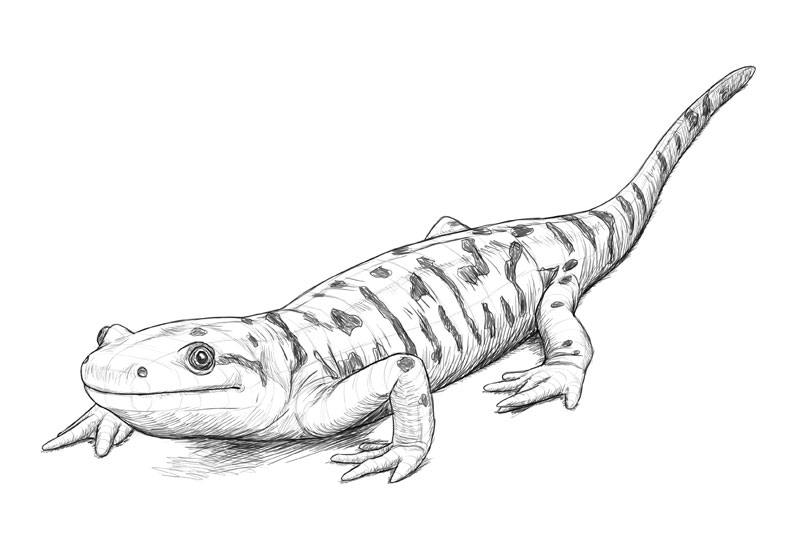
3D = three Sides
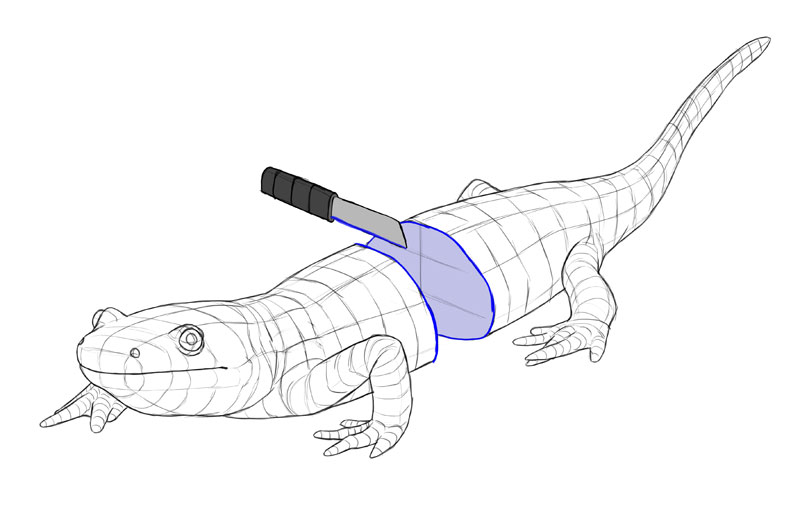
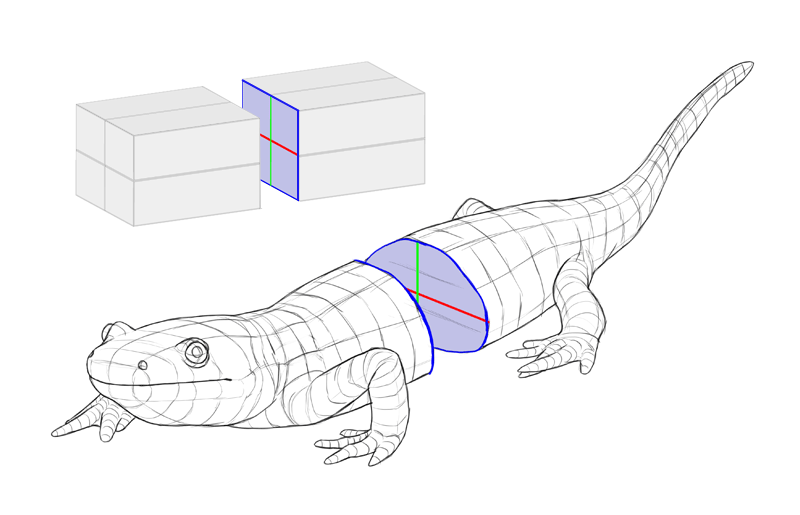
Equally y'all call up from schoolhouse, 3D solids take cross-sections. Because our salamander is 3D, information technology has cross-sections every bit well. So these lines are nil less, nothing more, than outlines of the body's cross-sections. Here's the proof:
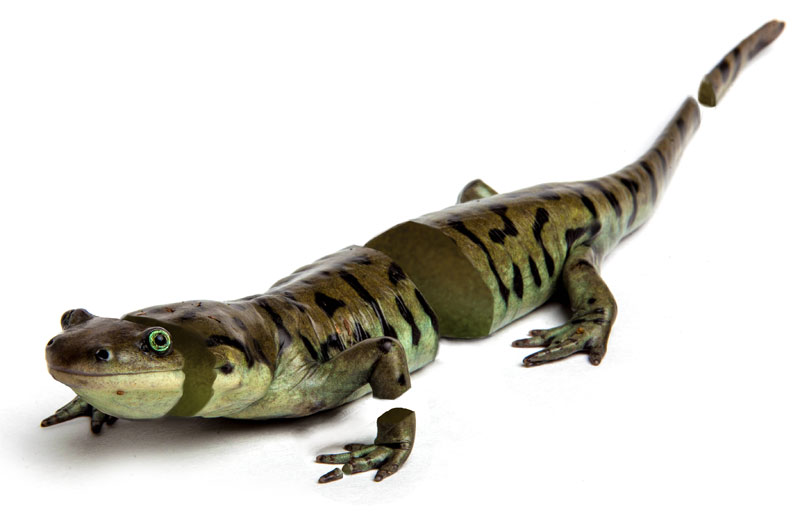
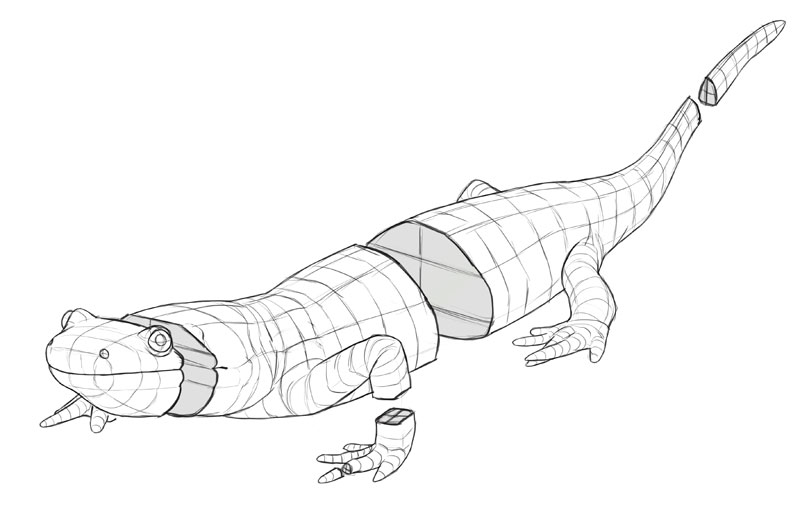
A 3D object can be "cut" in three dissimilar means, creating three cross-sections perpendicular to each other.
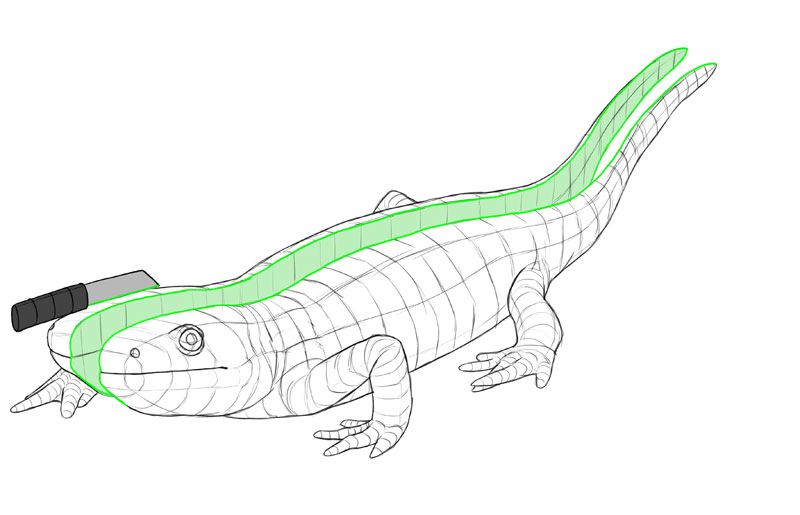
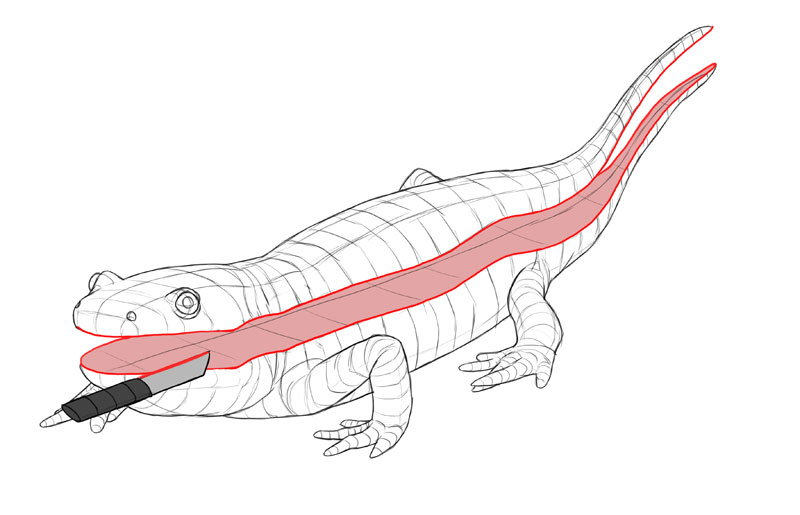
Each cross-section is 2D—which means it has ii dimensions. Each one of these dimensions is shared with 1 of the other cross-sections. In other words, 2d + second + 2nd = 3D!
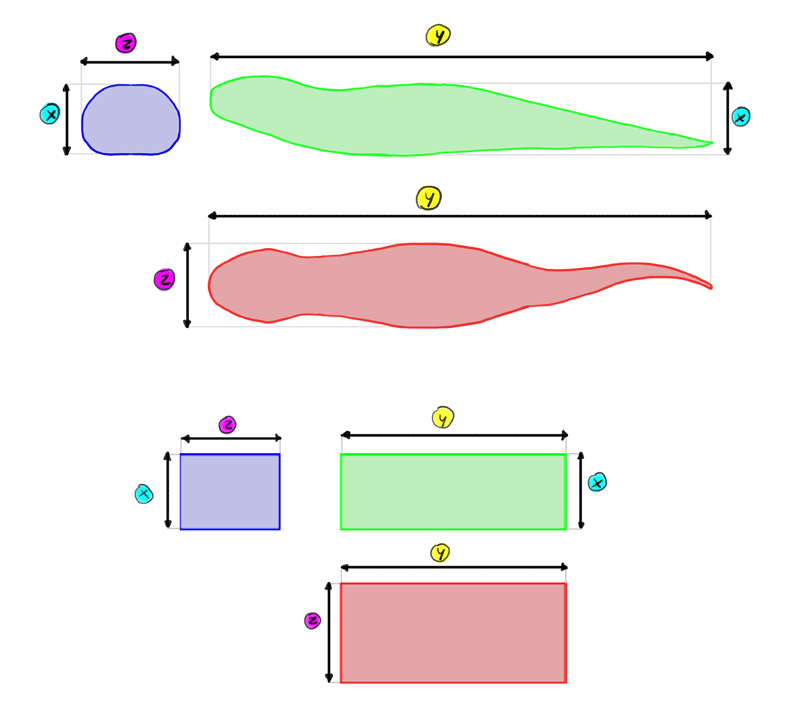
Then, a 3D object has 3 2D cross-sections. These three cross-sections are basically three views of the object—here the green i is a side view, the blueish one is the front/back view, and the red one is the top/lesser view.
Therefore, a cartoon looks 2nd if y'all can only see one or two dimensions. To arrive look 3D, you need to show all three dimensions at the aforementioned time.
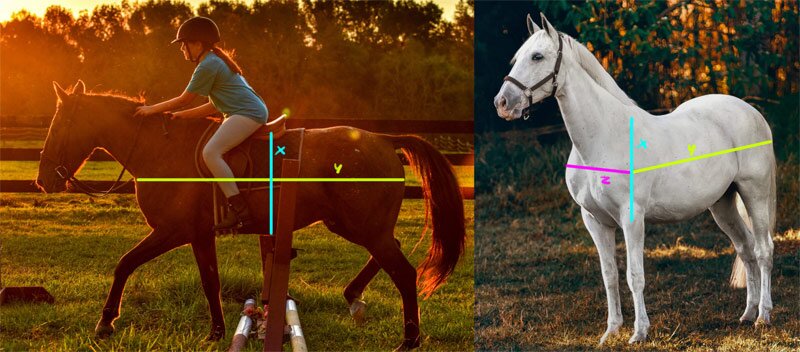
To arrive fifty-fifty simpler: an object looks 3D if you tin can come across at least two of its sides at the same time. Here you can see the elevation, the side, and the front end of the salamander, and thus it looks 3D.
But await, what's going on hither?
When you wait at a 2D cross-section, its dimensions are perpendicular to each other—at that place'south right angle between them. But when the same cross-department is seen in a 3D view, the angle changes—the dimension lines stretch the outline of the cantankerous-department.
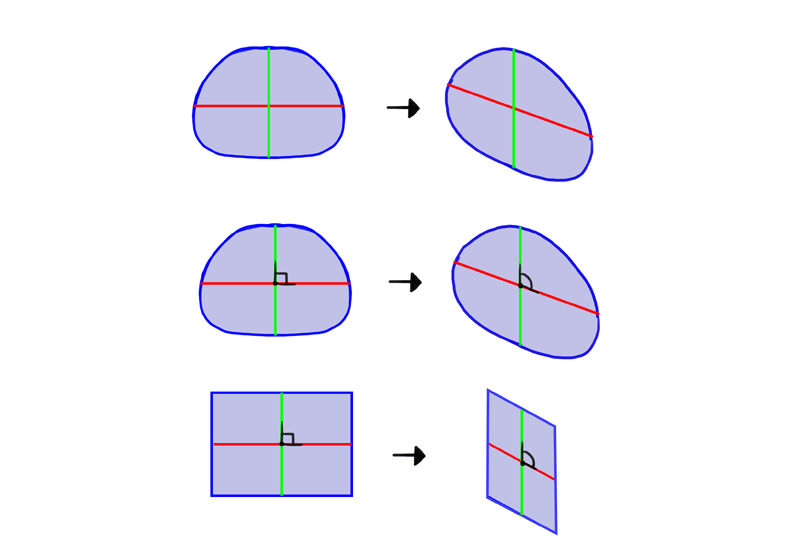
Allow'south do a quick recap. A single cross-section is easy to imagine, but it looks apartment, because it's second. To brand an object look 3D, you demand to bear witness at least two of its cross-sections. But when you draw two or more cross-sections at one time, their shape changes.
This alter is not random. In fact, it is exactly what your encephalon analyzes to sympathise the view. Then in that location are rules of this change that your subconscious mind already knows—and at present I'chiliad going to teach your conscious self what they are.
The Rules of Perspective
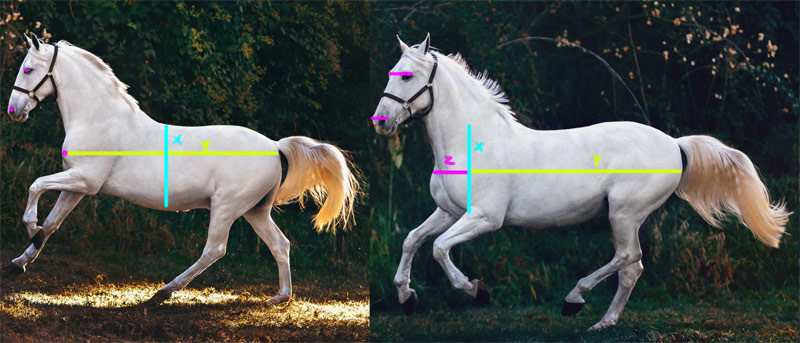
Here are a couple of different views of the aforementioned salamander. I accept marked the outlines of all 3 cross-sections wherever they were visible. I've also marked the top, side, and front. Have a good wait at them. How does each view affect the shape of the cantankerous-sections?
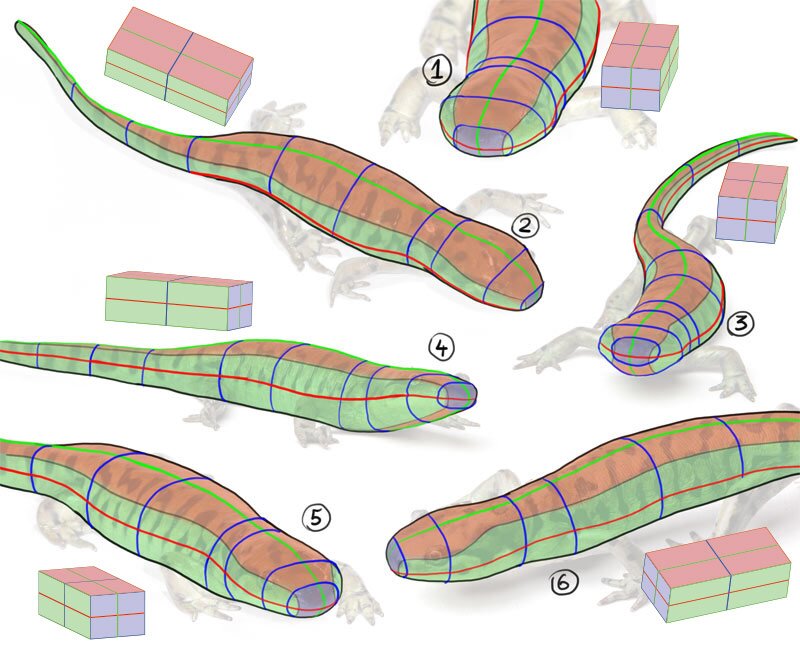
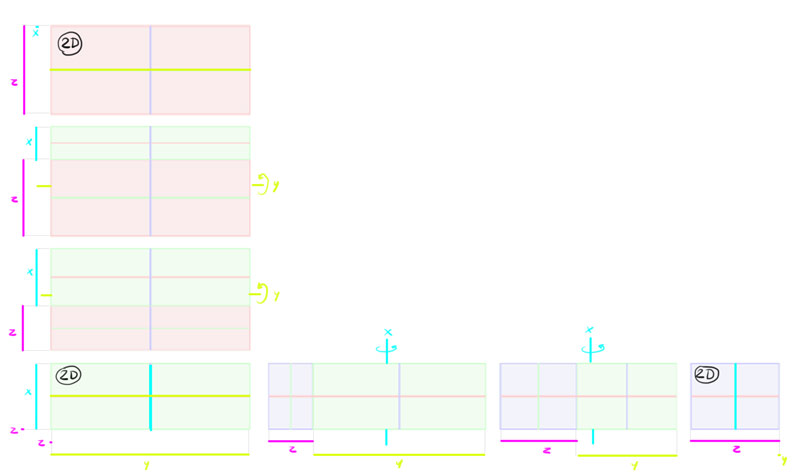
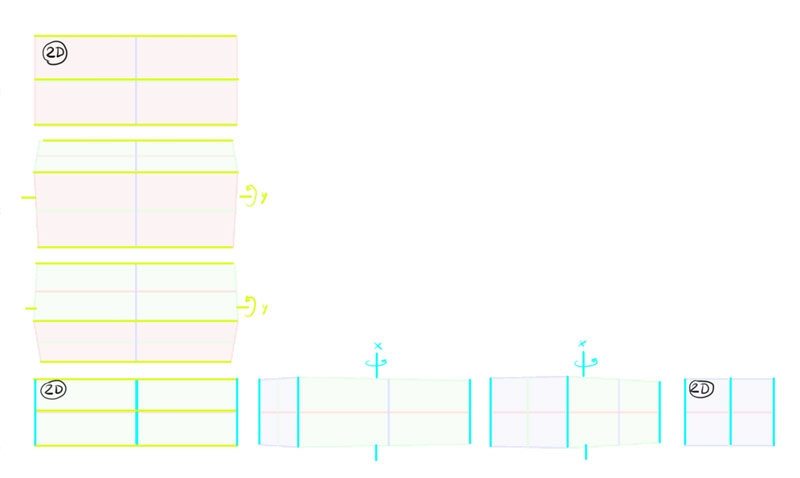
In a 2nd view, you lot accept ii dimensions at 100% of their length, and ane invisible dimension at 0% of its length. If yous use i of the dimensions as an axis of rotation and rotate the object, the other visible dimension will give some of its length to the invisible one. If you keep rotating, one will continue losing, and the other will continue gaining, until finally the offset one becomes invisible (0% length) and the other reaches its full length.
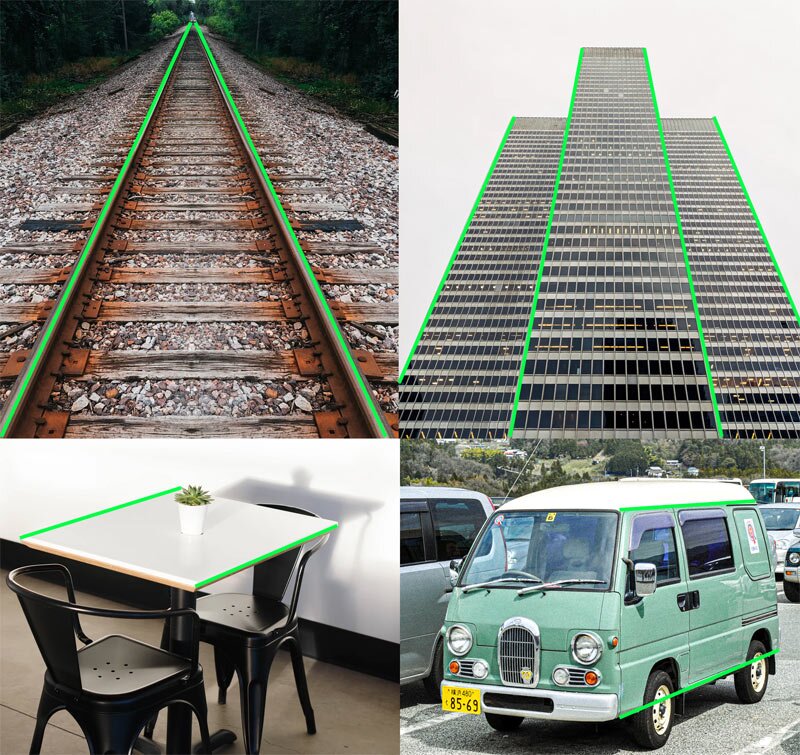
But… don't these 3D views look a niggling… flat? That's right—in that location's one more than thing that we need to have into business relationship here. There's something chosen "cone of vision"—the farther you await, the wider your field of vision is.
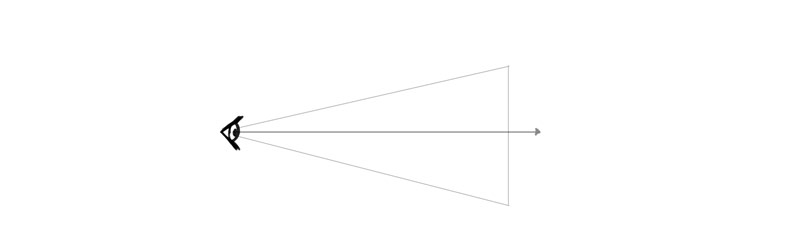
Because of this, you can comprehend the whole world with your hand if yous place it right in front of your eyes, but it stops working like that when you move it "deeper" within the cone (farther from your eyes). This also leads to a visual alter of size—the further the object is, the smaller information technology looks (the less of your field of vision information technology covers).
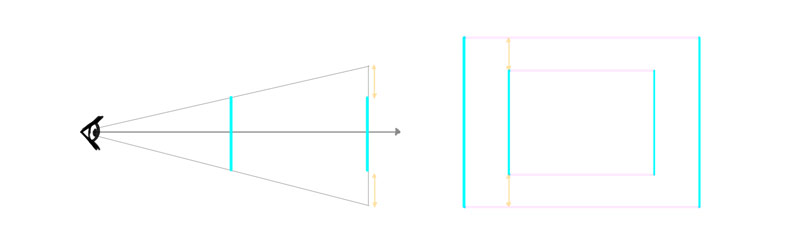
Now lets turn these 2 planes into two sides of a box by connecting them with the third dimension. Surprise—that third dimension is no longer perpendicular to the others!
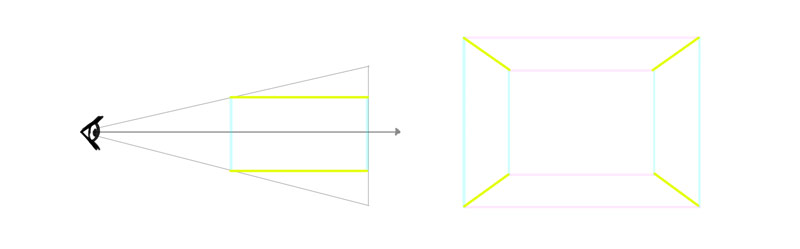
Then this is how our diagram should actually look. The dimension that is the axis of rotation changes, in the end—the edge that is closer to the viewer should be longer than the others.
It'southward of import to remember though that this effects is based on the altitude between both sides of the object. If both sides are pretty close to each other (relative to the viewer), this effect may be negligible. On the other paw, some camera lenses can exaggerate it.
So, to draw a 3D view with 2 sides visible, you place these sides together…
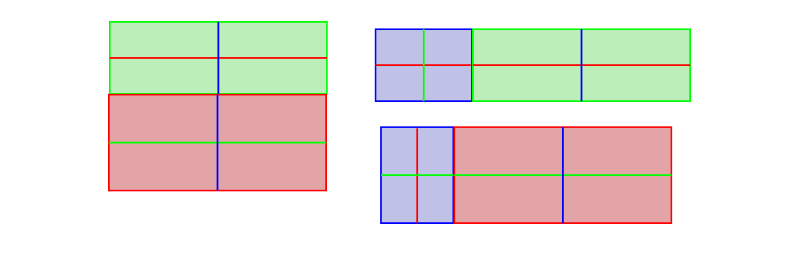
… resize them appropriately (the more of one you desire to show, the less of the other should be visible)…
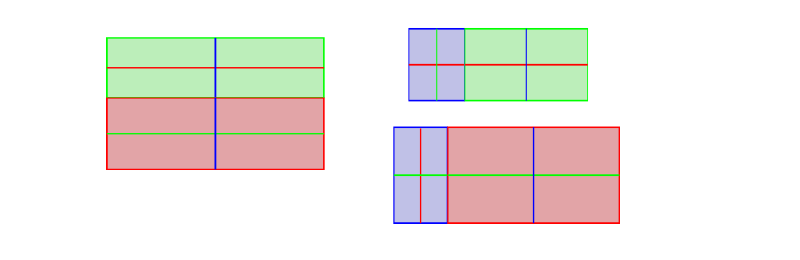
… and make the edges that are further from the viewer than the others shorter.
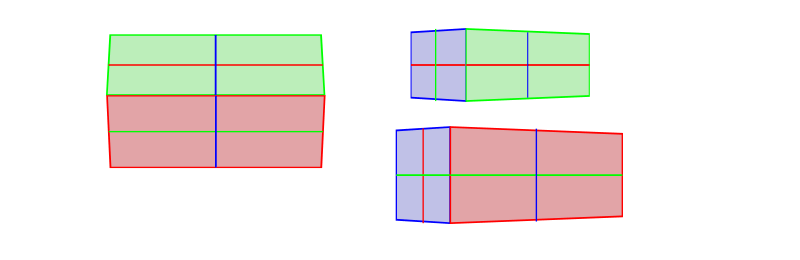
Here's how it looks in practice:
Merely what about the third side? It's impossible to stick it to both edges of the other sides at the same time! Or is information technology?
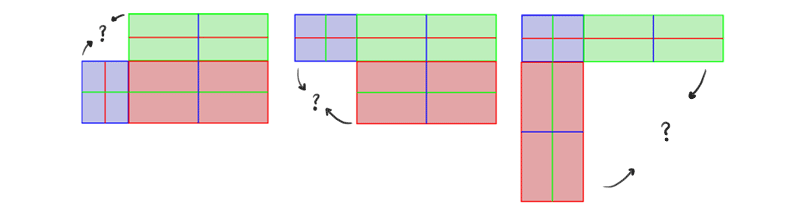
The solution is pretty straightforward: stop trying to keep all the angles correct at all costs. Slant one side, and so the other, and and so brand the 3rd i parallel to them. Easy!
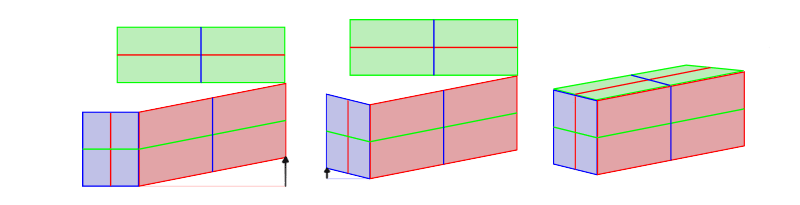
And, of class, let'south not forget about making the more afar edges shorter. This isn't always necessary, just it's good to know how to practise it:
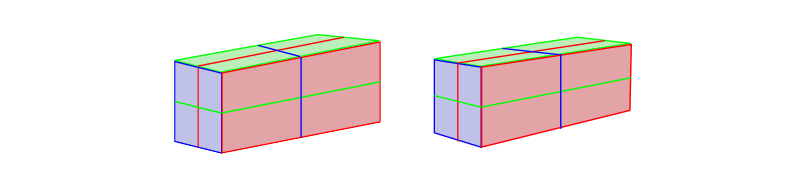
Ok, then yous demand to slant the sides, but how much? This is where I could pull out a whole set of diagrams explaining this mathematically, simply the truth is, I don't practice math when drawing. My formula is: the more you slant one side, the less y'all slant the other. Simply wait at our salamanders once more and check it for yourself!
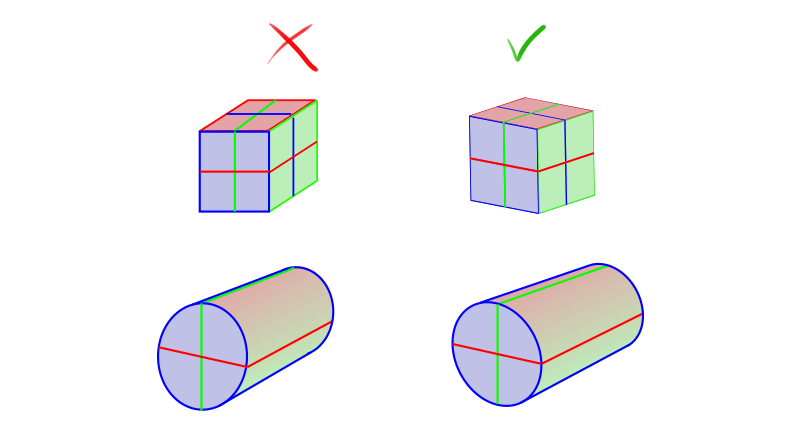
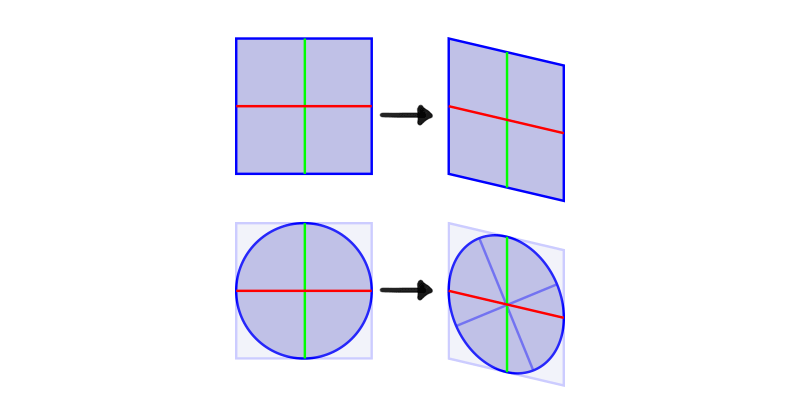
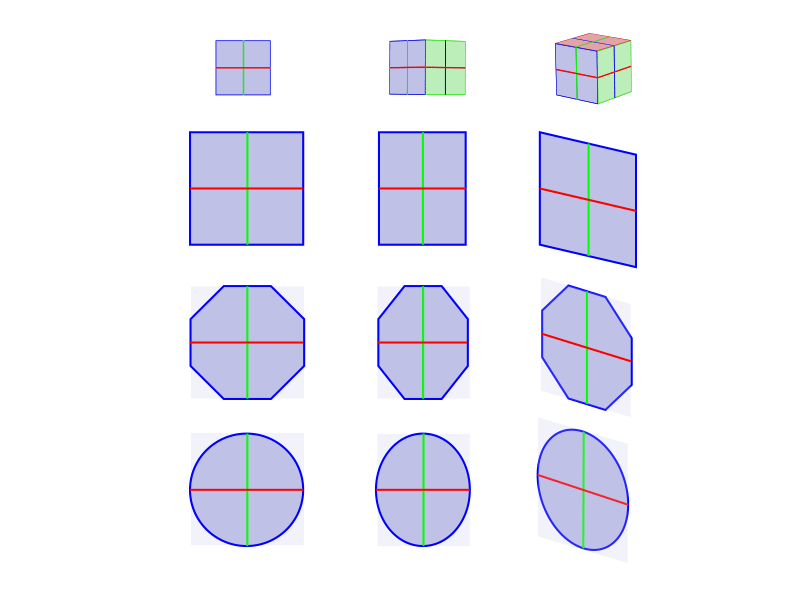
Only if you lot want to draw creatures similar our salamander, their cross-sections don't really resemble a foursquare. They're closer to a circumvolve. Just like a square turns into a rectangle when a second side is visible, a circle turns into an ellipse. But that's non the end of it. When the third side is visible and the rectangle gets slanted, the ellipse must become slanted as well!
How to slant an ellipse? Just rotate it!
This diagram tin can assistance you lot memorize it:
Multiple Objects
So far we've but talked about drawing a single object. If yous want to describe two or more objects in the aforementioned scene, there's usually some kind of relation between them. To show this relation properly, make up one's mind which dimension is the centrality of rotation—this dimension will stay parallel in both objects. Once you do it, you can do whatever y'all want with the other two dimensions, as long as y'all follow the rules explained earlier.
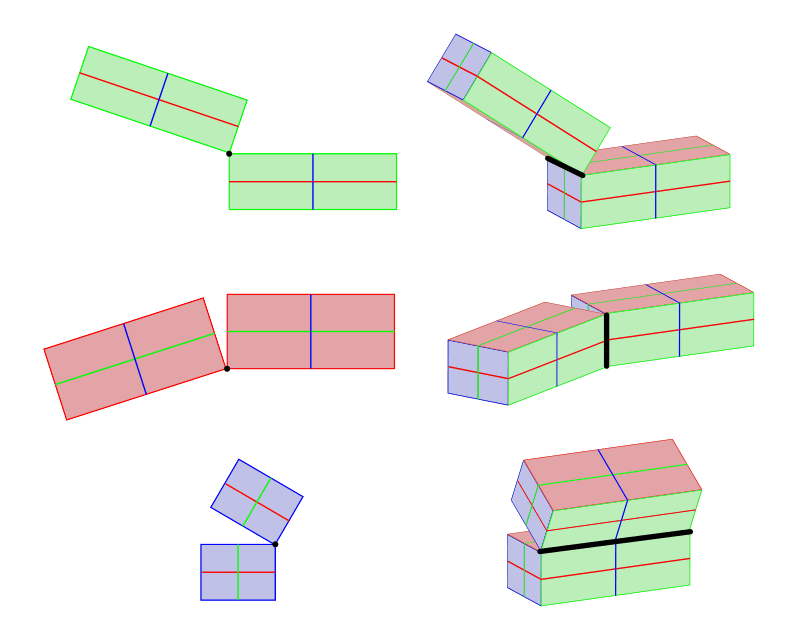
In other words, if something is parallel in ane view, then it must stay parallel in the other. This is the easiest style to cheque if yous got your perspective right!
At that place's another type of relation, called symmetry. In 2d the axis of symmetry is a line, in 3D—it'due south a plane. Merely it works but the same!
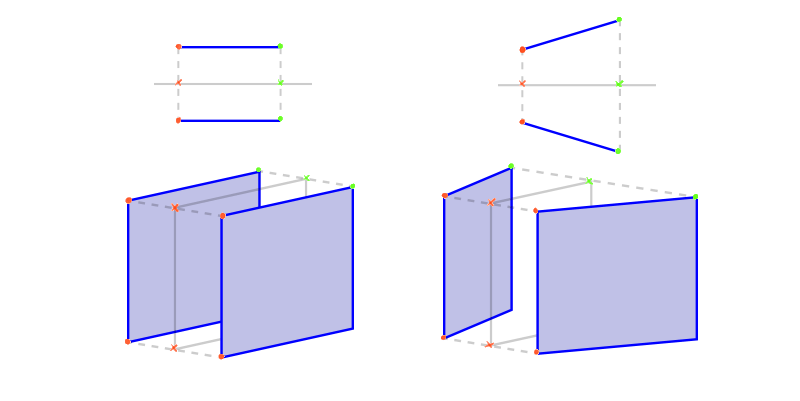
You lot don't demand to depict the plane of symmetry, merely you should be able to imagine information technology correct betwixt two symmetrical objects.
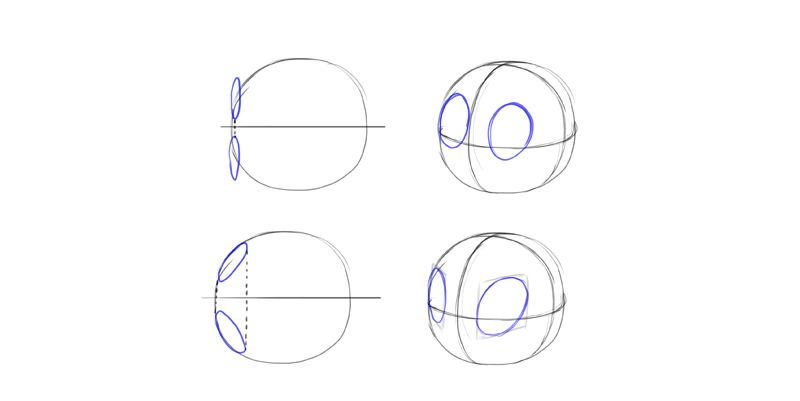
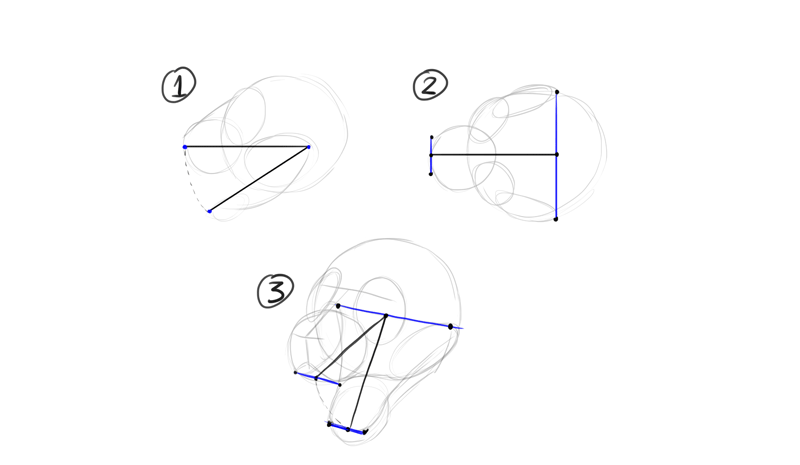
Symmetry will help you with hard drawing, similar a head with open jaws. Hither effigy 1 shows the angle of jaws, figure 2 shows the axis of symmetry, and figure three combines both.
3D Drawing in Practise
Practice 1
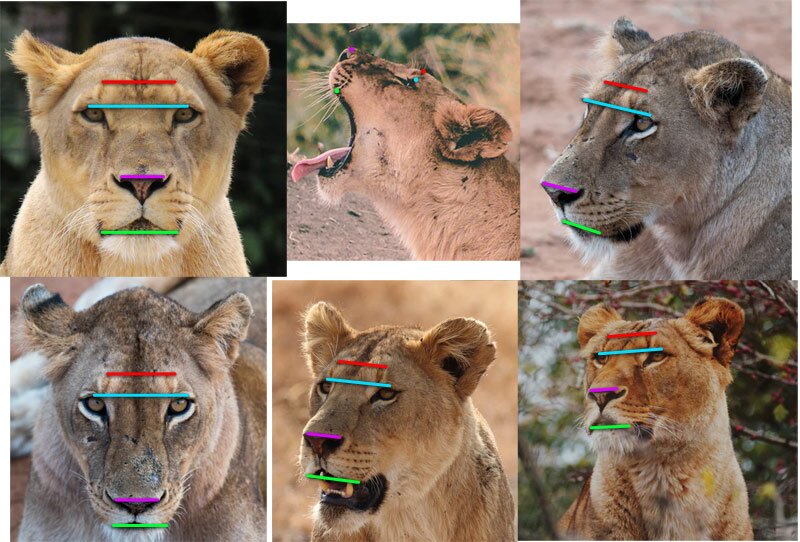
To sympathize it all better, you can endeavour to detect the cross-sections on your own now, cartoon them on photos of existent objects. Commencement, "cut" the object horizontally and vertically into halves.
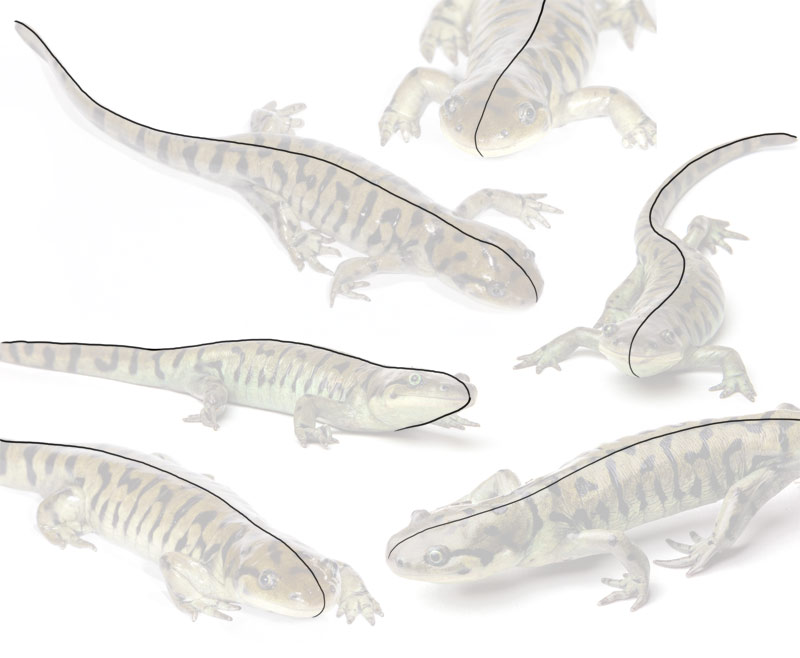
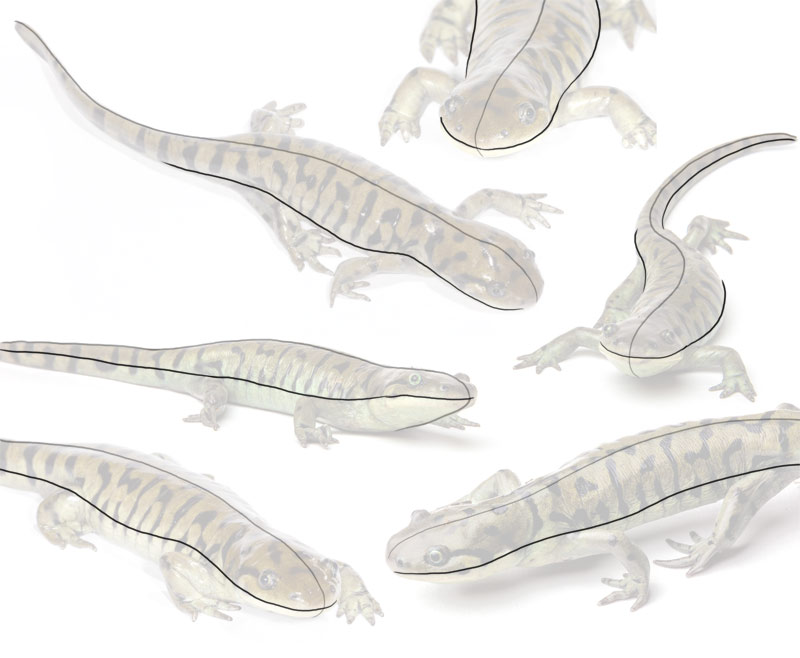
Now, find a pair of symmetrical elements in the object, and connect them with a line. This will be the tertiary dimension.
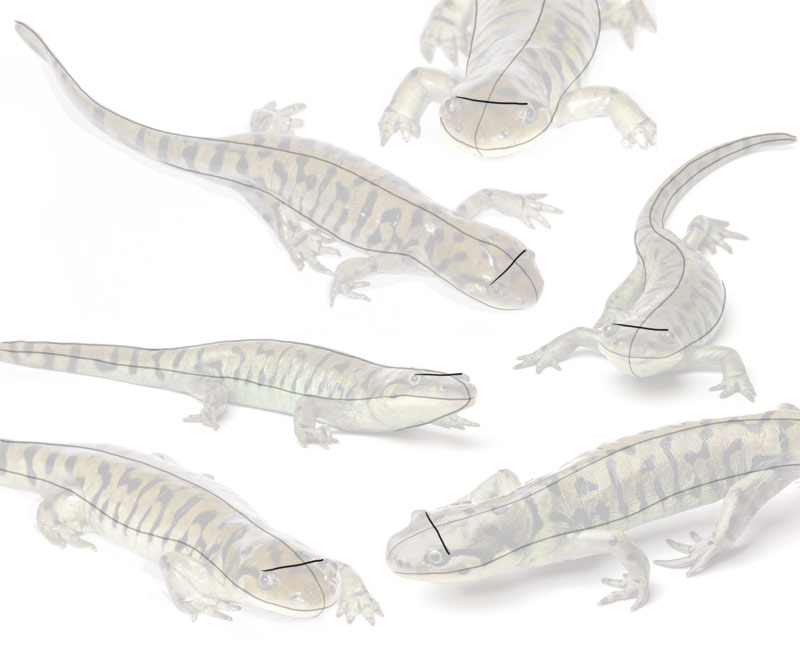
Once you have this direction, y'all can draw it all over the object.
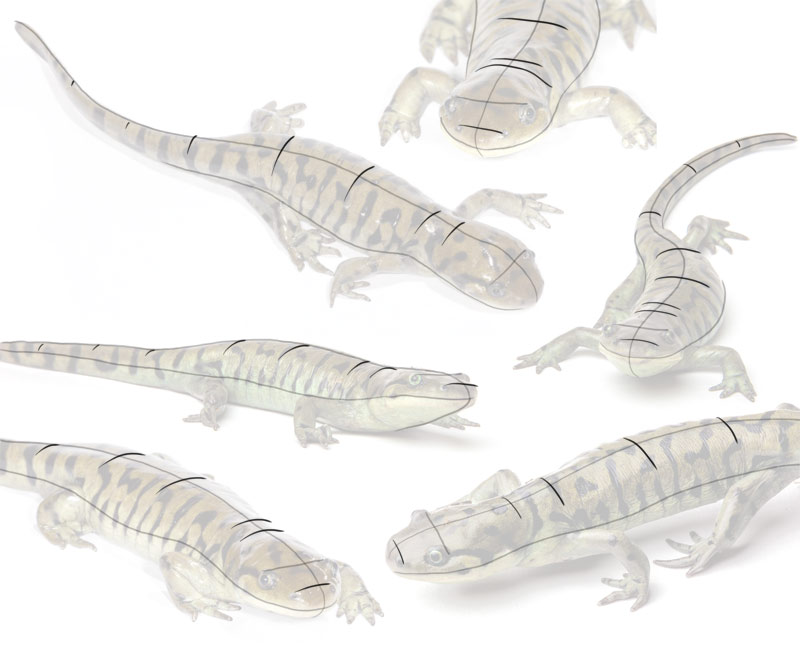
Keep drawing these lines, going all around the object—connecting the horizontal and vertical cross-sections. The shape of these lines should be based on the shape of the 3rd cross-section.
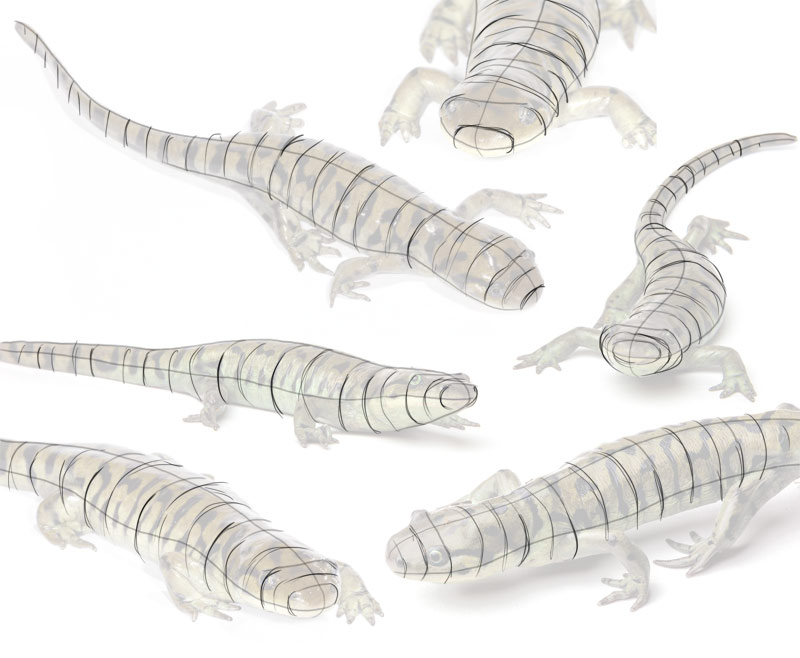
One time you're done with the big shapes, you lot tin can practise on the smaller ones.
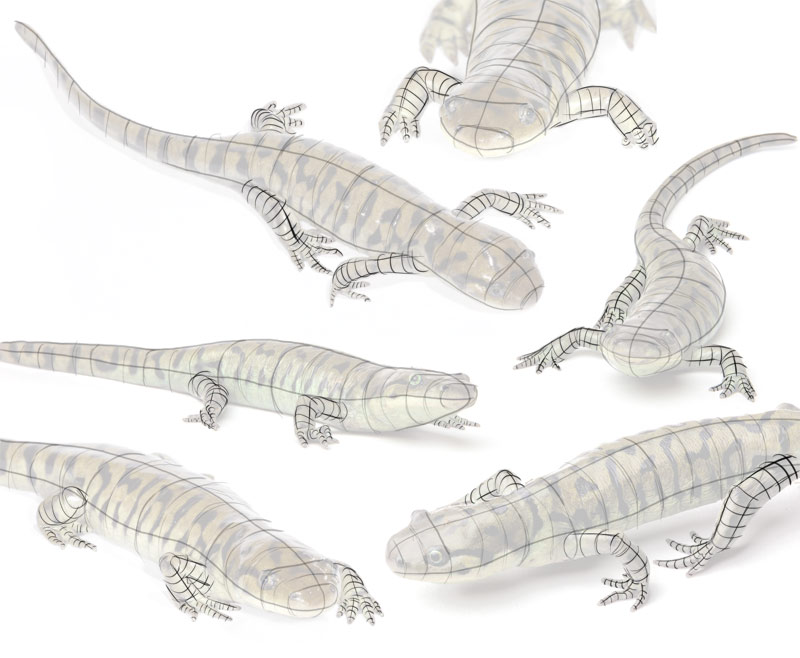
You'll shortly notice that these lines are all you lot need to draw a 3D shape!
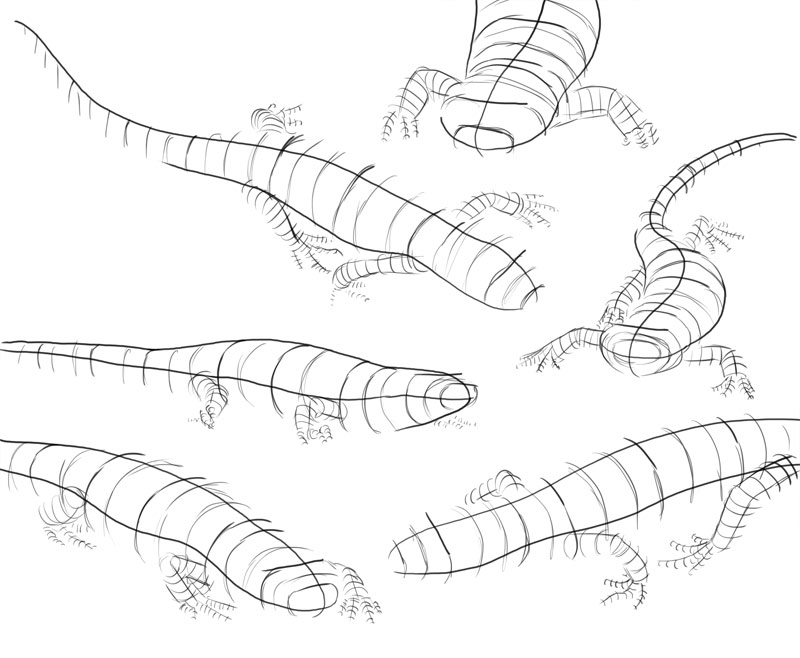
Do 2
You can practice a similar do with more than complex shapes, to better understand how to draw them yourself. First, connect corresponding points from both sides of the body—everything that would be symmetrical in top view.
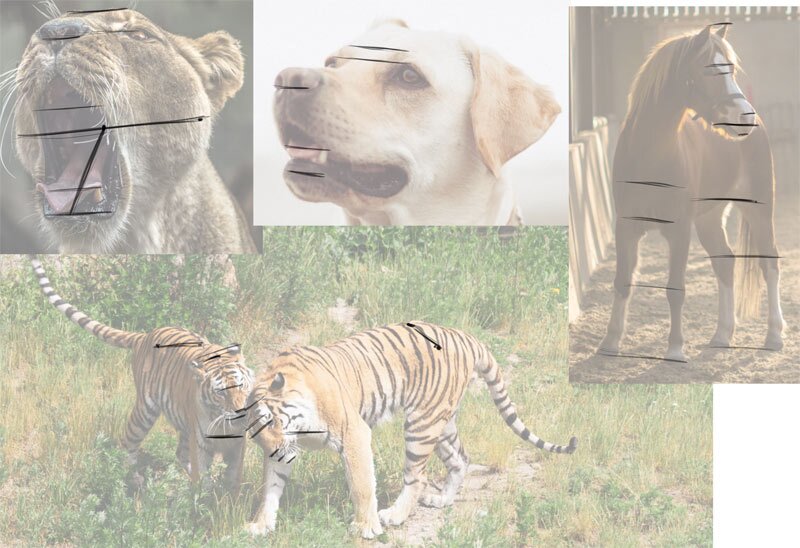
Mark the line of symmetry crossing the whole trunk.
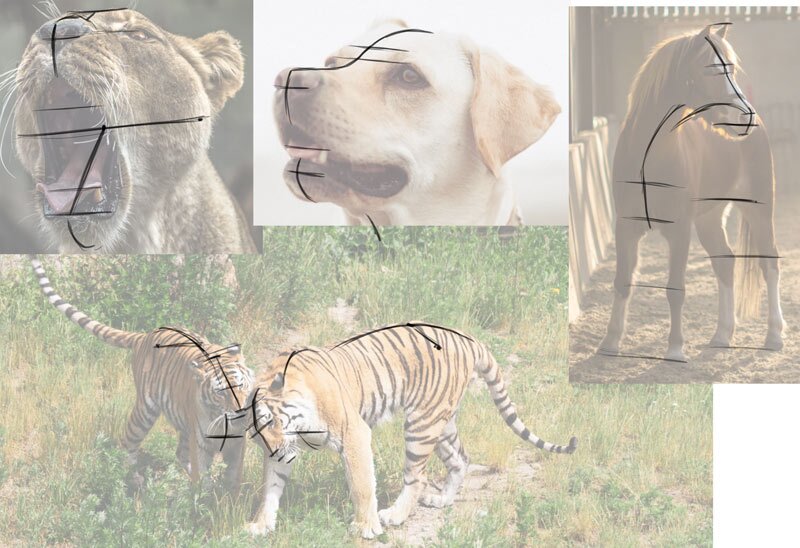
Finally, effort to find all the unproblematic shapes that build the final grade of the body.
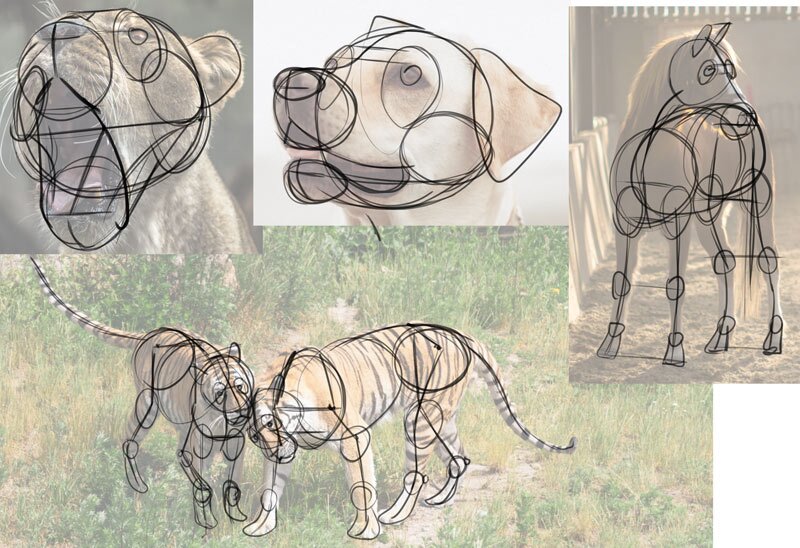
Now you take a perfect recipe for cartoon a like animate being on your own, in 3D!
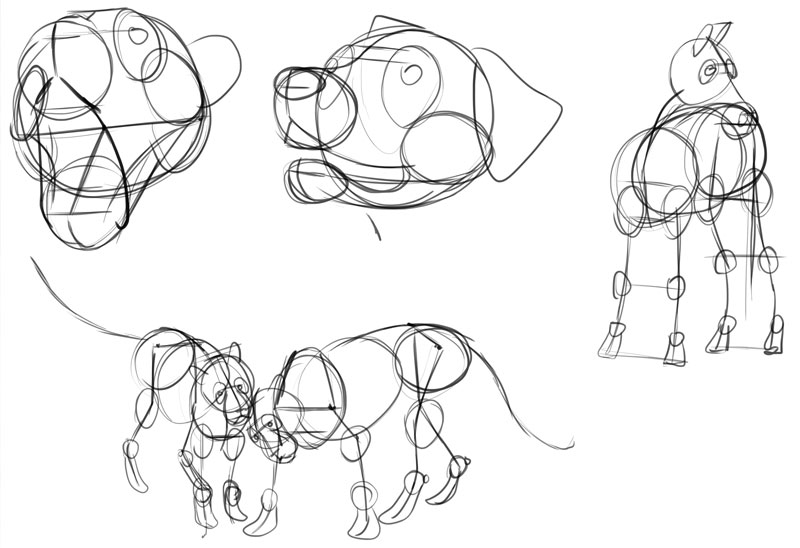
My Process
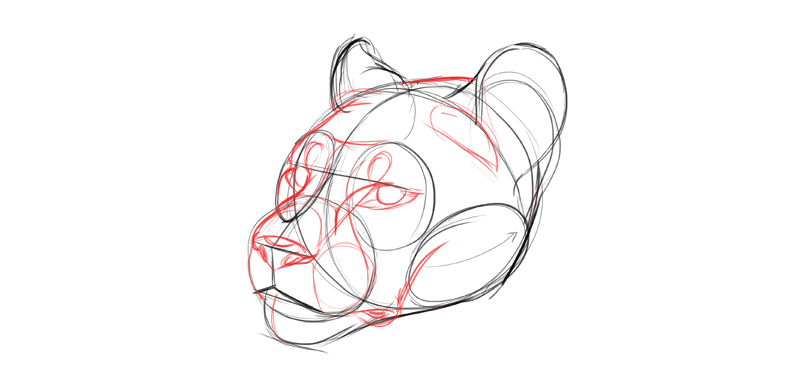
I gave you all the information you demand to draw 3D objects from imagination. Now I'm going to show yous my own thinking procedure behind drawing a 3D creature from scratch, using the knowledge I presented to you today.
I unremarkably commencement drawing an animal head with a circumvolve. This circumvolve should contain the cranium and the cheeks.
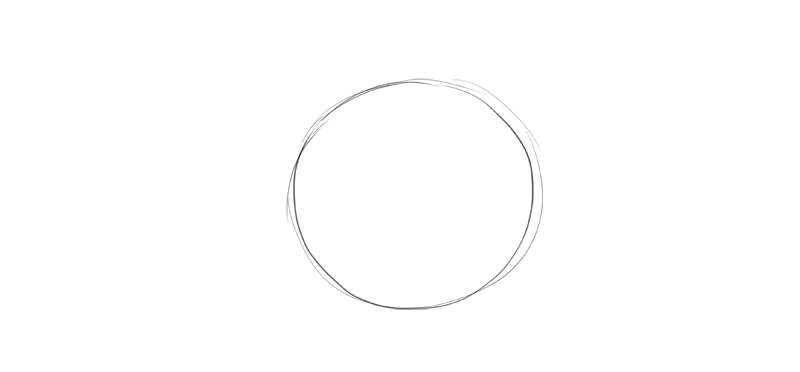
Next, I depict the middle line. It'due south entirely my decision where I want to place information technology and at what bending. But once I make this determination, everything else must exist adjusted to this showtime line.
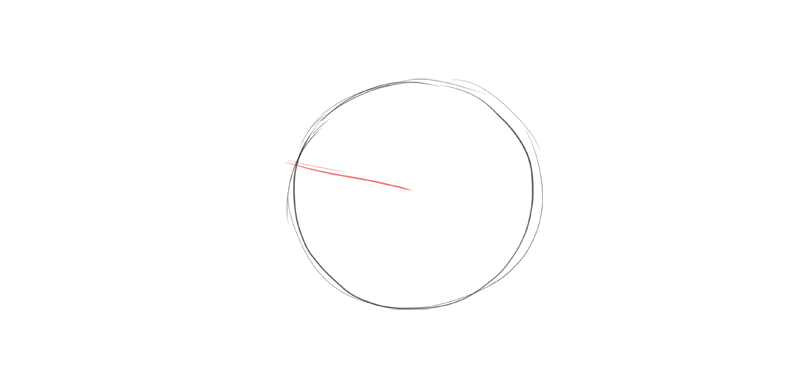
I depict the middle line between the eyes, to visually divide the sphere into two sides. Can you notice the shape of a rotated ellipse?
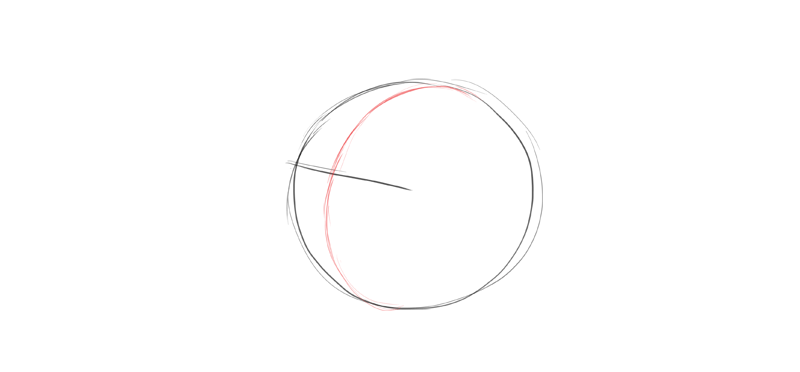
I add another sphere in the front. This will be the muzzle. I discover the proper location for it past drawing the nose at the same time. The imaginary plane of symmetry should cut the nose in half. Also, notice how the nose line stays parallel to the eye line.
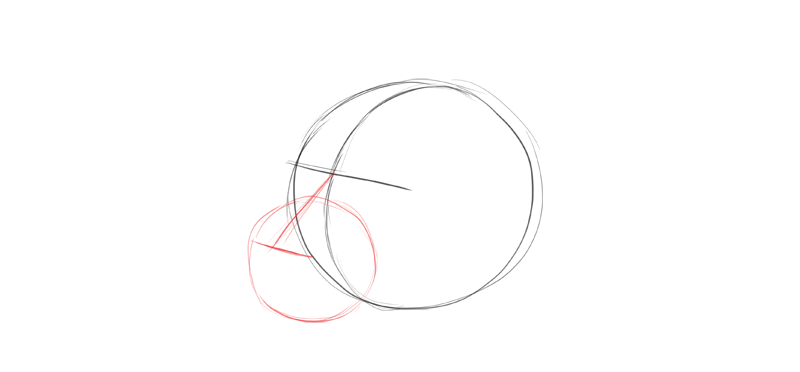
I draw the the expanse of the eye that includes all the bones creating the eye socket. Such big expanse is easy to draw properly, and information technology will help me add the eyes later. Keep in mind that these aren't circles stuck to the front of the face—they follow the curve of the master sphere, and they're 3D themselves.
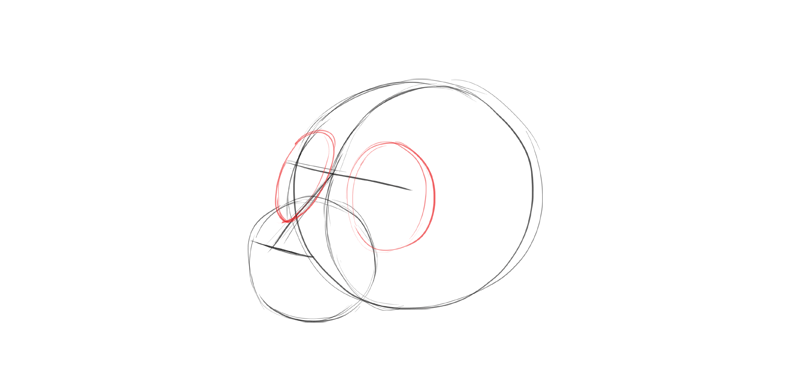
The mouth is so piece of cake to depict at this bespeak! I just accept to follow the direction dictated by the eye line and the olfactory organ line.
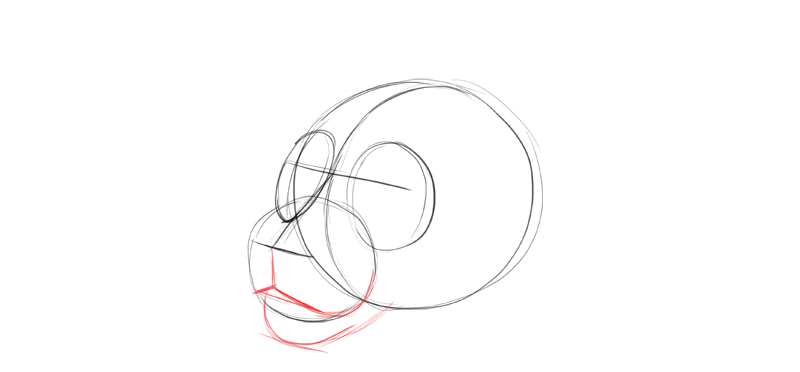
I draw the cheek and connect information technology with the mentum creating the jawline. If I wanted to draw open jaws, I would depict both cheeks—the line betwixt them would be the axis of rotation of the jaw.
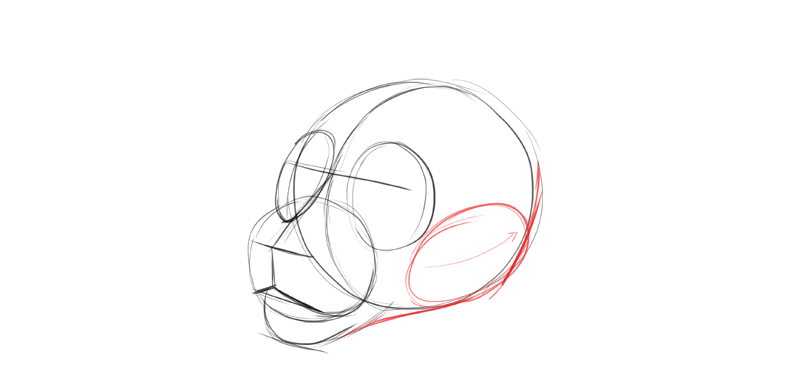
When drawing the ears, I brand sure to draw their base on the same level, a line parallel to the eye line, merely the tips of the ears don't have to follow this rule and then strictly—information technology's considering usually they're very mobile and can rotate in various axes.
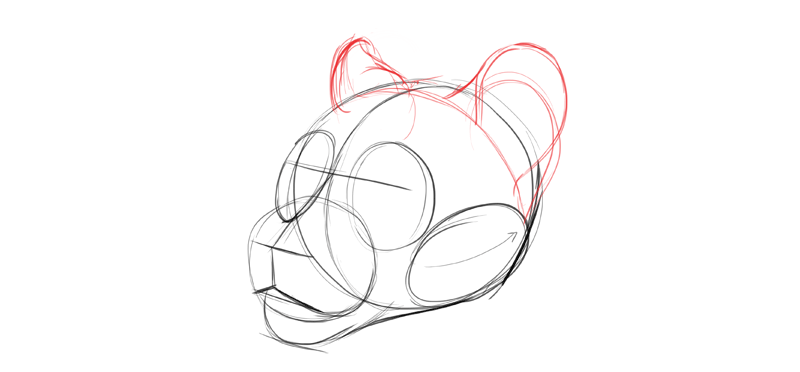
At this bespeak, adding the details is equally piece of cake as in a 2D cartoon.
That's All!
It'due south the end of this tutorial, but the beginning of your learning! You should now be gear up to follow my How to Draw a Big True cat Caput tutorial, every bit well as my other animal tutorials. To practice perspective, I recommend animals with simple shaped bodies, like:
- Birds
- Lizards
- Bears
You should likewise discover it much easier to understand my tutorial virtually digital shading! And if you lot desire fifty-fifty more than exercises focused directly on the topic of perspective, y'all'll like my older tutorial, total of both theory and practice.
aroncorephrearm1992.blogspot.com
Source: https://monikazagrobelna.com/2019/11/25/drawing-101-how-to-draw-form-and-volume/
0 Response to "draw 2d and 3d shapes"
Postar um comentário