Do You Need to Know How to Draw Traditionally to Do Digital Art
If yous want to become a digital creative person, just you don't know where to outset, this series is for you! I'll explain to you all the basics in an organized manner, without assuming any prior knowledge about the topic. In this 2nd part I'm going to show y'all the nigh important differences between creating traditional art and digital fine art.
Part 1: Digital Drawing for Beginners: Best Programme for Digital Drawing
Some people say that drawing on a computer is not really drawing, because the reckoner does the job for you. Others claim that in that location's no difference between drawing on a sail of paper and a graphics tablet—subsequently all, you hold the pencil and the stylus the aforementioned way. Simply I would say that the truth lies in between.
In this article I'll show you what makes digital sketching different from traditional cartoon, and what to wait when you lot transition from your paper sketchbook to a digital workspace. I volition be using Autodesk SketchBook every bit an example, but the same rules should apply to other drawing programs.
What Epitome Size Should Yous Use?
When y'all draw on newspaper, the size of the cartoon doesn't affair so much—if you want to brand the artwork bigger, you simply need to bring information technology closer to your optics, and it will be magically enlarged with no loss. You can also take a photo or scan it, and create a huge print even out of a tiny artwork.
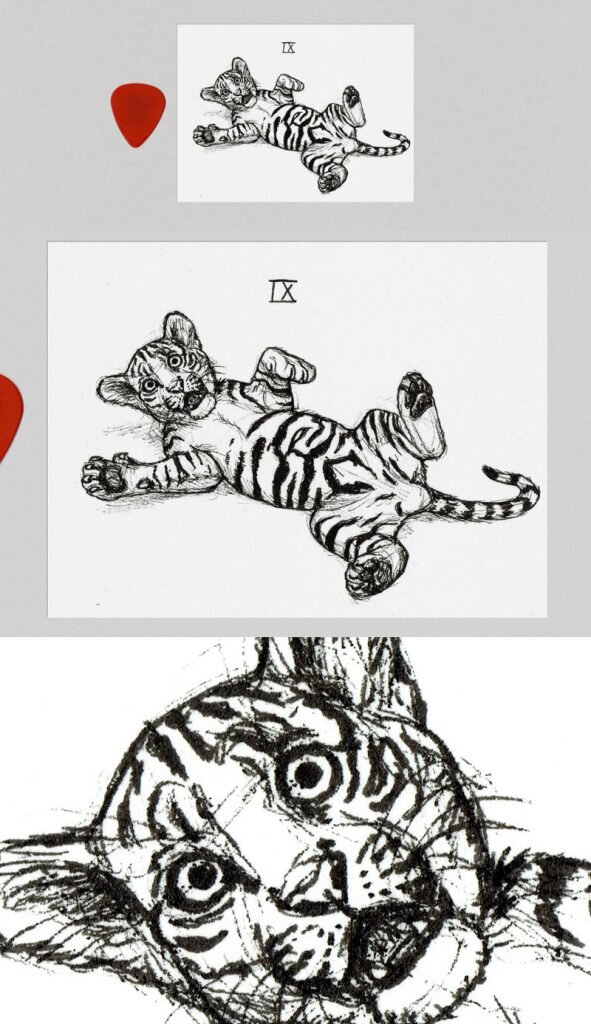
In traditional art, size is relative
In digital fine art, it doesn't piece of work like this. Yes, you can zoom in, but at one point your image will start to get pixelated or blurry. Why? Because traditional lines are made of infinitely small particles, and digital lines are made of pixels.
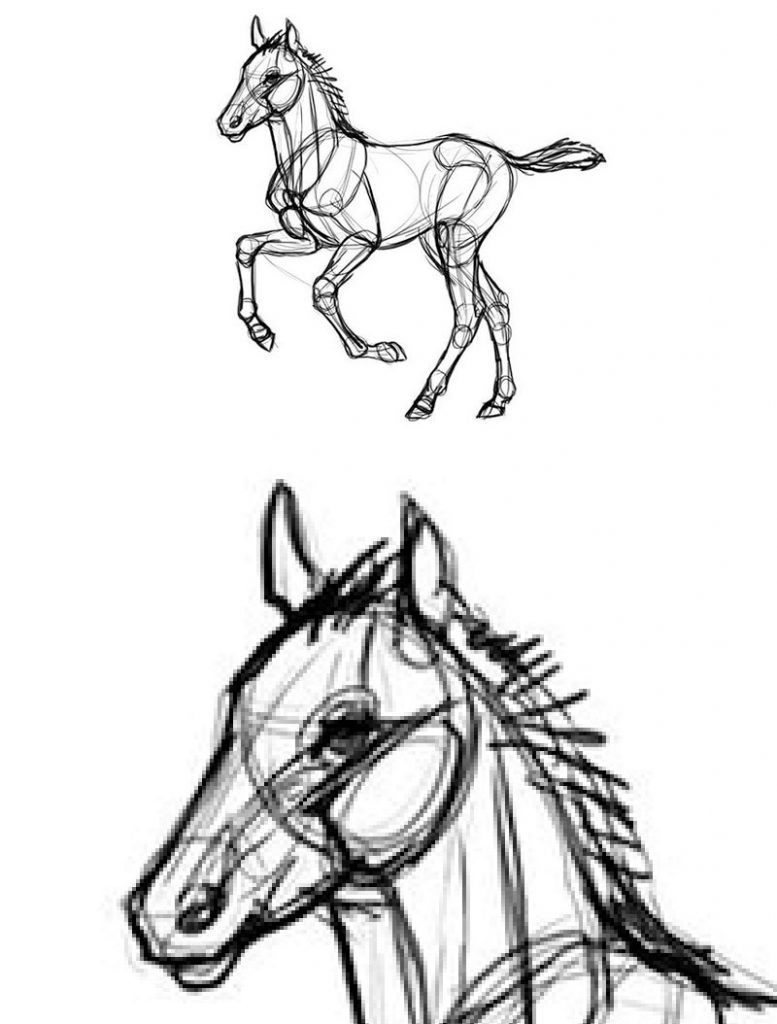
In that location are special algorithms that tin remove the pixelation, merely it never compares to the quality of the original size
Permit me show you how information technology works. Your digital sail is like a grid made of tiny footling squares called pixels. When you describe, you simply fill up these squares with colors. The smaller the pixels are, the smoother the lines look. And then we want to keep the pixels as minor equally possible!
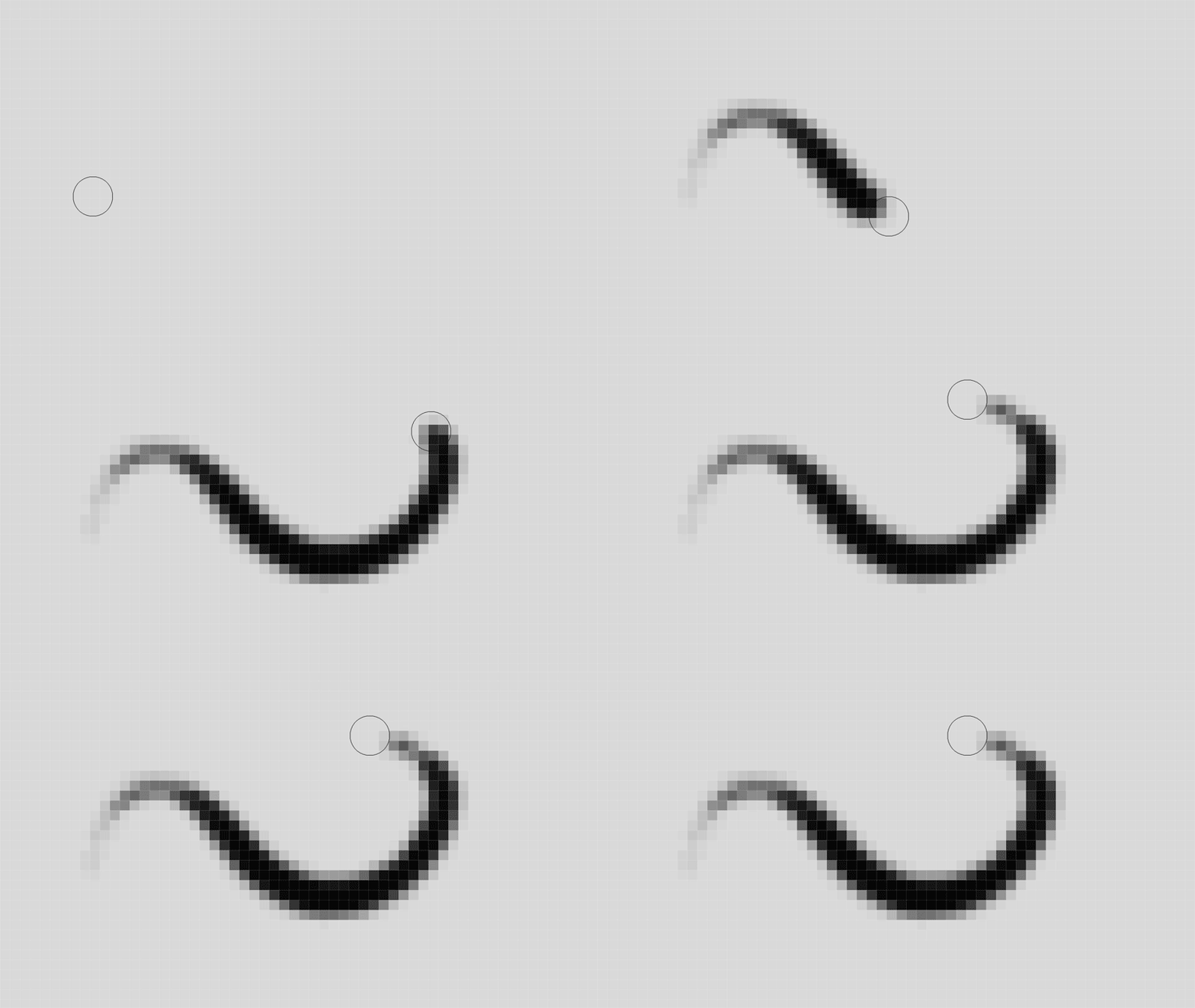
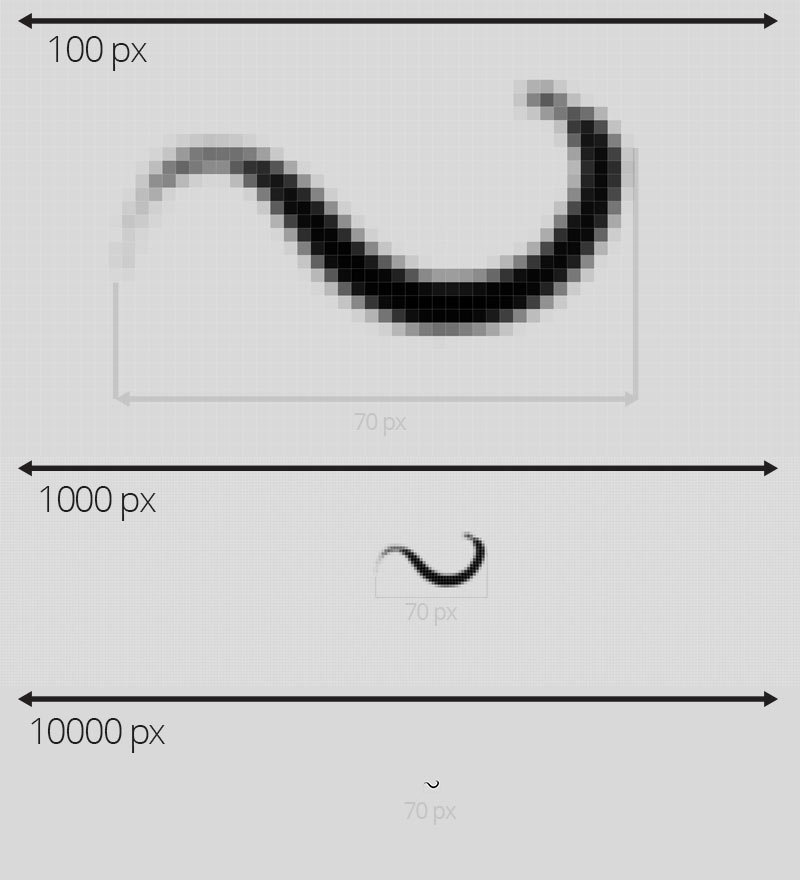
The size of pixels is relative, then the more than of them you lot have in the prototype, the smaller they will seem. That's why it's and so important to choose a proper epitome size before yous get-go cartoon. In theory, if nosotros want to keep the pixels as small as possible, we should choice the biggest image size possible. Merely big size comes at a toll. The more pixels in your every stroke, the more piece of work your processor has to do to display information technology. If you notice any lags when drawing, this means that your processor has a difficult fourth dimension catching upwards to your hand. So we don't need a huge size, we simply demand optimal size.
Optimal size depends on how you intend your artwork to be displayed in the terminate. If you want to create a printed artwork, pay attention to the Document Size values. They show you the maximum size of the impress you can create with the electric current image size. Resolution of 300 pixels per inch means a very loftier impress quality, but you can lower information technology to 72 pixels if the artwork will exist generally seen from a altitude.
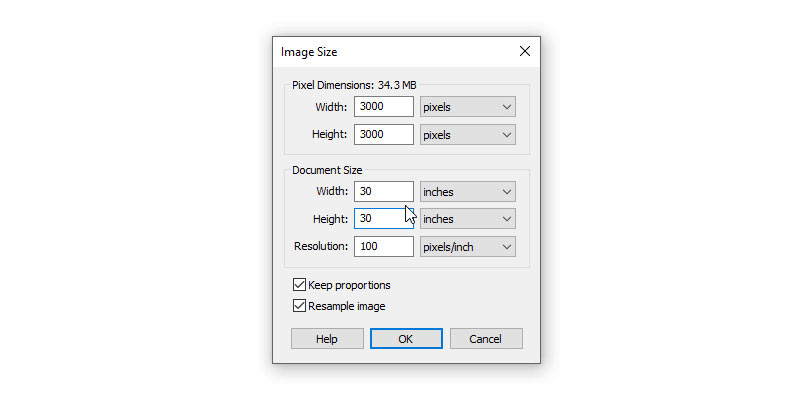
Go to Prototype > Image Size to come across this window
If y'all want to publish your artwork digitally only, you have to consider two things separately: working resolution and target resolution. Working resolution depends on the amount of details yous need. For example, if you want to draw scratches on individual scales of a dragon, yous need a high resolution that will allow you lot to keep these scales big. But if you lot want a more stylized artwork, and so smaller resolution will exist fine.
In SketchBook, default resolution is 3000 pixels wide and high. This is perfect for most sketches, and then I ordinarily start my drawings this fashion. And if I desire to move to the detailing stage, I simply resize the image to effectually 6000 pixels wide.
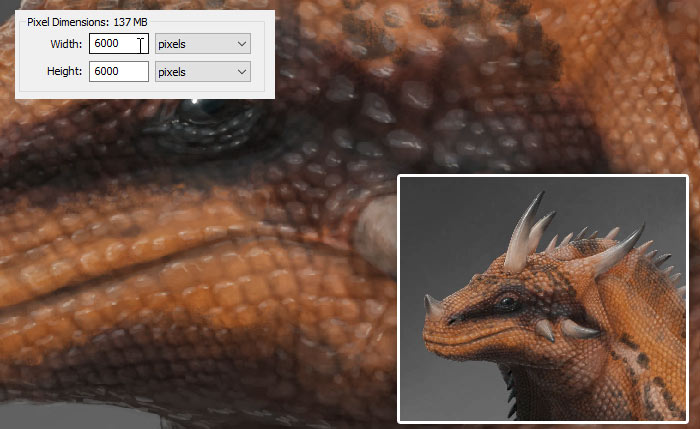
Bigger size gives yous admission to the tiniest of details…
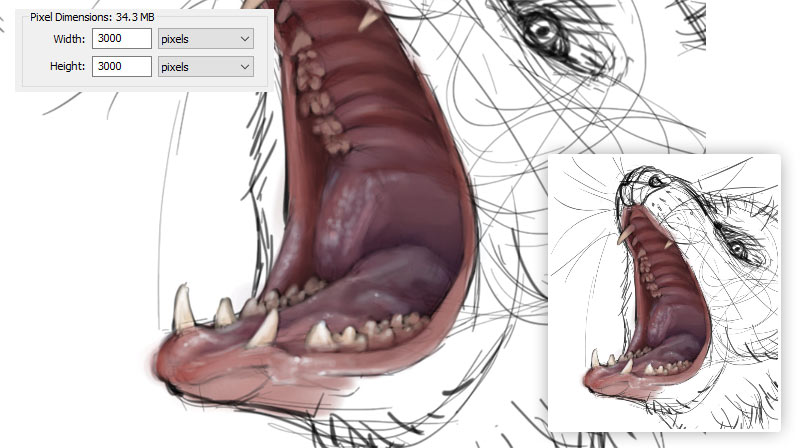
… only you don't always demand them.
But working resolution is for you, not for the viewers. You don't want people to analyze every scratch on every scale, yous want them to see the dragon equally a whole! That's why, before yous post your artwork online, you lot should resize a copy of the epitome to the target resolution. Target resolution, the 1 that your viewers volition run into, shouldn't exist too big for one more reason—information technology would make information technology easy to print the artwork in high quality and sell it without your permission.
For example, a loftier quality A4 print tin exist created from an prototype 2500 pixels wide and 3500 pixels loftier. Make it twice smaller, and it can still exist turned into a slightly lower quality A4 print! Then in about cases, I try to keep the longer side below 1500 pixels, and usually even below chiliad pixels. The other reason for it is it simply looks practiced on virtually screens—big enough to bear witness all the details, and small enough to prove it all without scrolling. Only it's all a mater of personal preference!
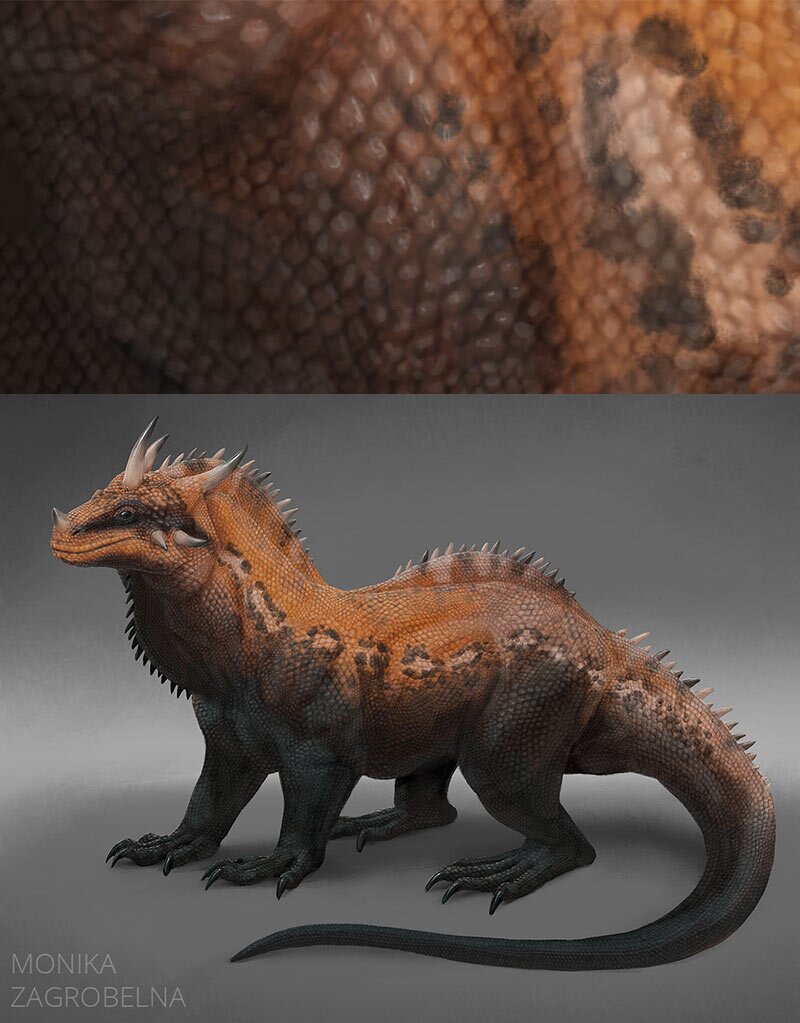
Big vs small. Which one do you lot recollect looks meliorate?
What Brushes Should Y'all Employ?
Your drawing stylus is a magical thing—it can be a brush, or a pencil, or an eraser, or whatever you tell it to exist. But how to tell information technology what you want it to exist? Or in other words, how to recreate your favorite traditional tools in the digital environment?
Basic Brush Settings
SketchBook offers bones and advanced castor settings. Let'due south start with basic ones. You tin can decide how big your brush marks should be, and if you desire them to be fully opaque, or perhaps more or less transparent. Equally for the size, I adopt to change information technology dynamically with the bracket keys ( [ and ] ). I never change the Opacity here—I prefer to control it with the pressure, or with layer settings.
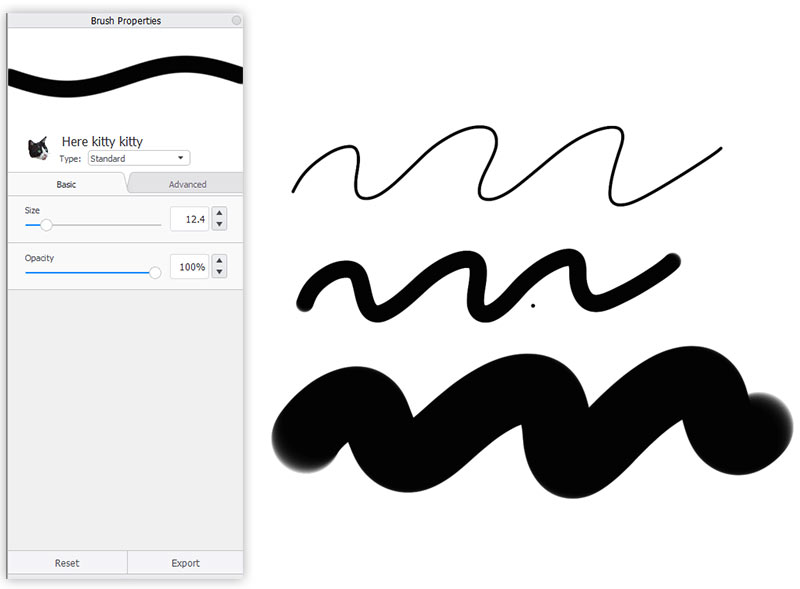
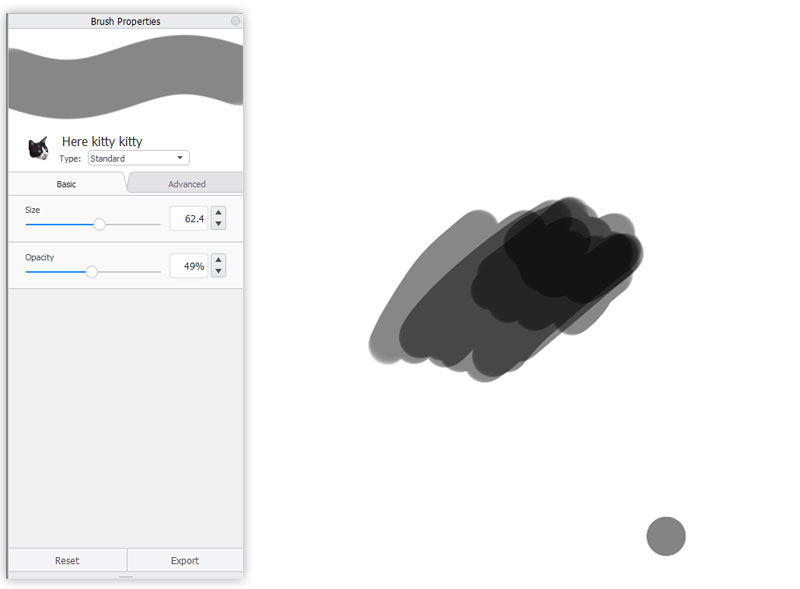
Advanced Brush Settings
The advanced settings are more interesting. SketchBook divides them into four categories: Pressure, Stamp, Nib, and Randomness. I've prepared a very basic brush for you, so download information technology if you lot like, and allow's experiment with it together.
Link Pressure level to Size
Pressure means, of course, how difficult you printing your stylus to the tablet. You can utilize pressure level to impact Size, Opacity, and Flow. Size is pretty straightforward—what do yous want to happen to the Size of the stroke when you printing hard, and what when yous press lite? By tinkering with these sliders you tin create tapered lines, or thick and round lines.
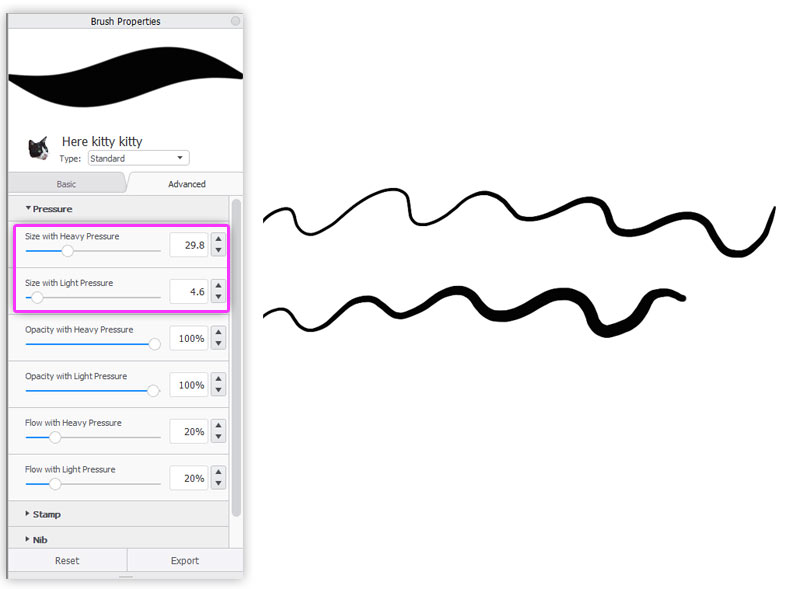
Link Pressure level to Opacity
Opacity is even cooler. Permit's say you lot want to sketch something, but yous're non yet certain what you're drawing. You lot tin describe very, very lightly, to make these lines barely visible. And when you get-go feeling more confident, you tin just press harder to brand the lines darker and more than visible. Honestly, I wish such a tool existed in traditional fine art—it'due south like a pencil and an ink liner all in one!
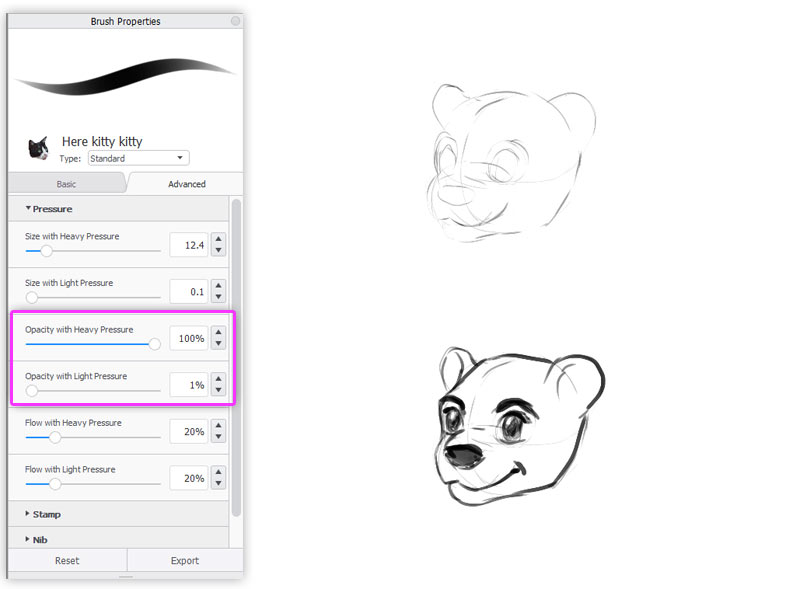
Linking Pressure to Flow
Flow tells you lot how concentrated the paint is. If Flow is low, you'll have to pigment a lot of strokes until yous achieve the level of translucency set by Opacity. If it'south high, yous'll become that level very fast. So if yous want to add h2o to your paint, only reduce the Flow.
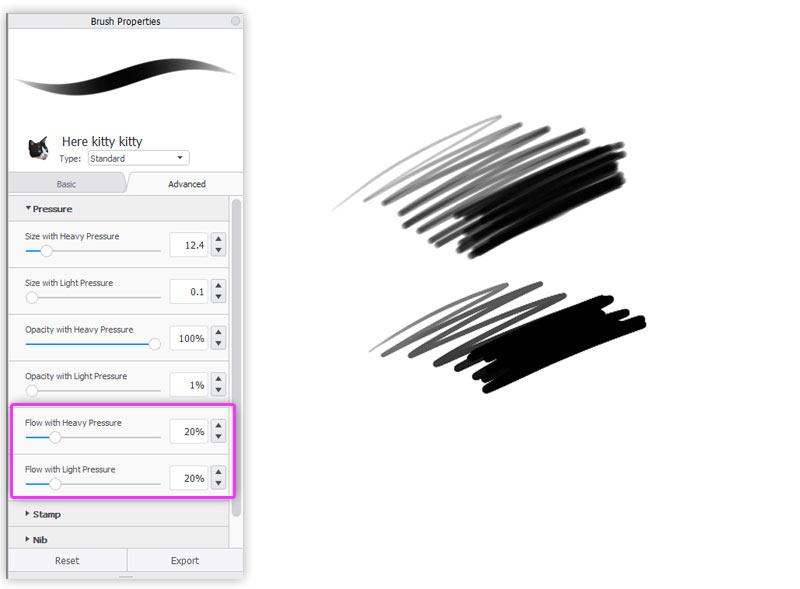
Stamp
Stamp is a name for the basic shape of your brush. You lot can run into this shape by clicking once. You lot can either draw a lot of these shapes one afterward one to create an illusion of a line, or add some space in between to create an interesting issue. That'due south what Spacing is for. The lower the Spacing, the smoother the line, simply be careful—your figurer may not handle the lowest setting well, specially if your paradigm size is big.
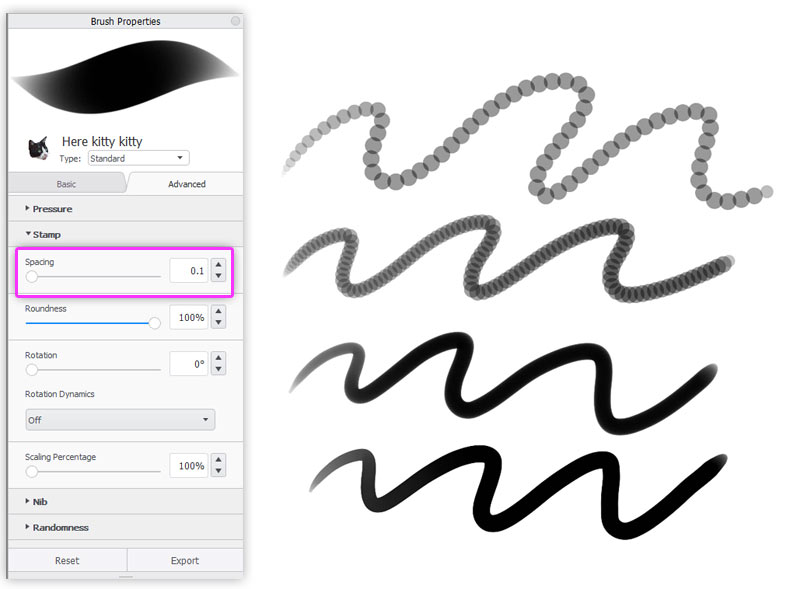
Roundness
To empathise Roundness, imagine the nib of your tool. Is information technology round like a brawl-bespeak pen? Or flattened, like a fountain pen? This is where you tin regulate information technology.
When the stamp stops beingness round, its orientation towards the edges of the sail starts to matter. You can easily regulate it past changing the Rotation. This is especially important for calligraphy brushes. You can also alter the rotation dynamically by binding information technology to the direction or tilt of your stylus.
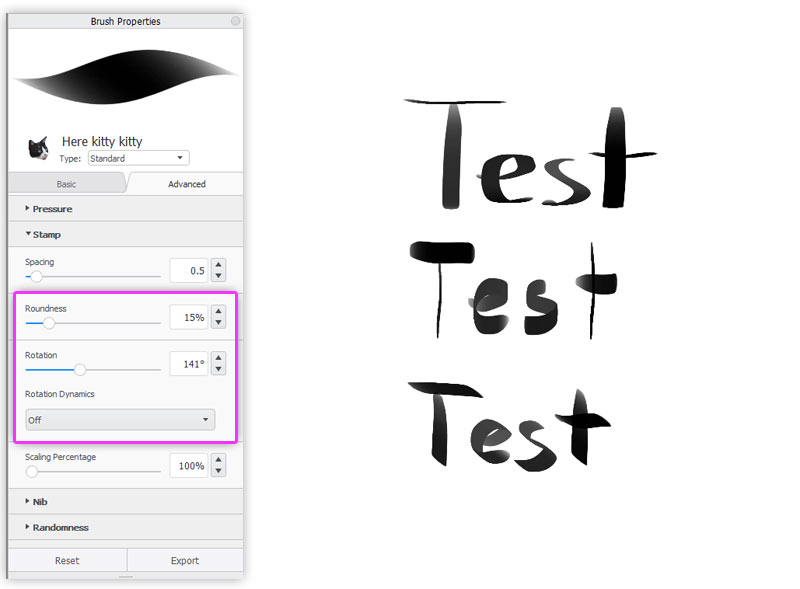
Softness
Permit's go to the Bill tab. Hither y'all can decide if you want your castor to be soft like an airbrush, hard similar an ink liner, or something in between.
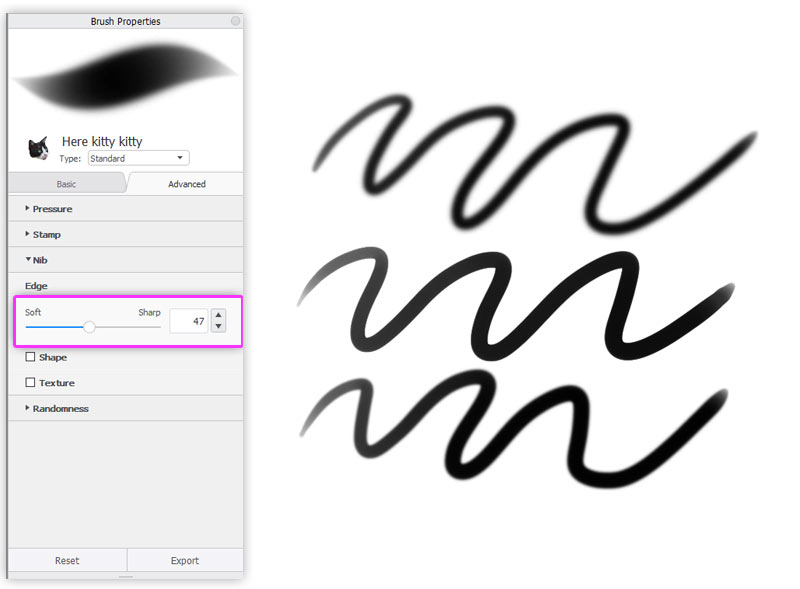
Shape
If y'all check Shape, you tin replace the basic Postage stamp shape with something more interesting. This simple mechanism allows you lot to create an endless variety of brushes, even multi-color ones! You tin can import a shape, selection one from the default list, or draw your own shape with some other brush and capture information technology straight from the canvas.
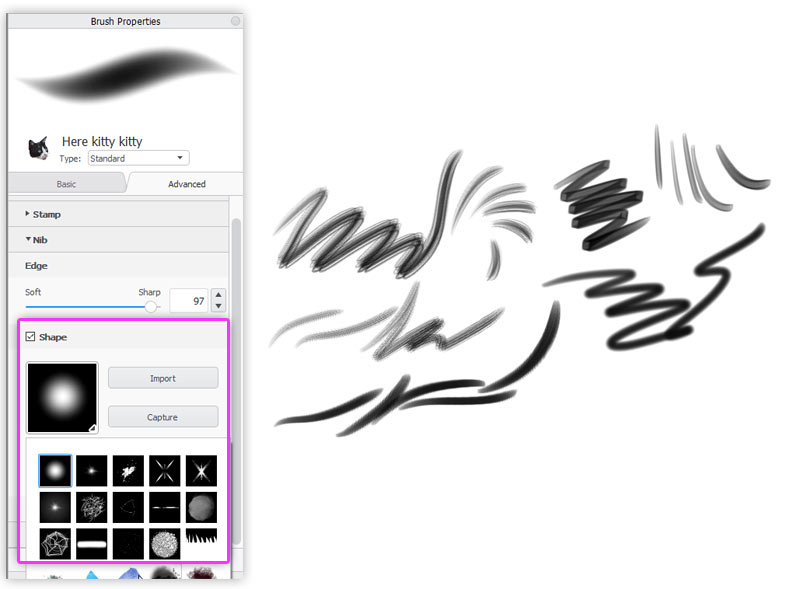
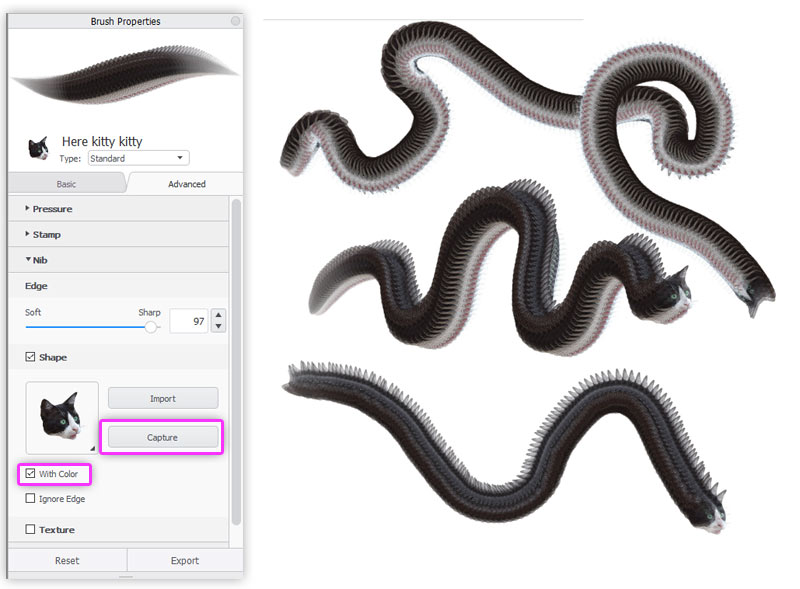
Texture
You tin besides add texture to the strokes. It doesn't change the shape of the brush, just rather distorts each stroke with a called design. Digital lines often seem unnaturally clean in comparing to traditional ones, merely adding a texture can assistance yous avert it. You lot can use textures downloaded from the net, use the default library, or capture something from the canvass. The sliders in this section will help y'all adjust the texture to your needs.
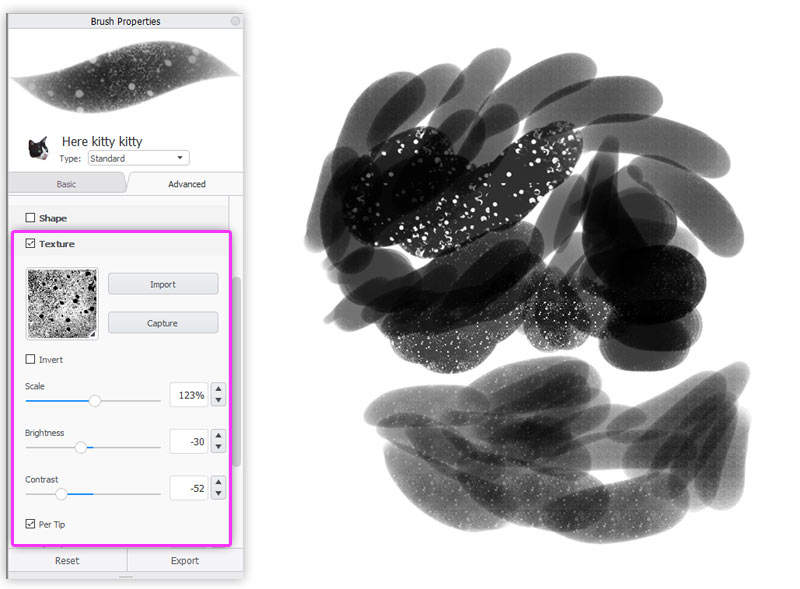
Randomness
Finally, allow'southward have a wait at the Randomness tab. Traditional strokes always have this hint of unpredictability to them. This makes traditional art look more organic, more natural, less planned. But you can simulate this consequence by adding a pinch of randomness to your strokes. You lot might have ready a specific Size, Opacity, or Period earlier, but changing them slightly from time to time won't hurt—instead, it will give your brush some life of its own.
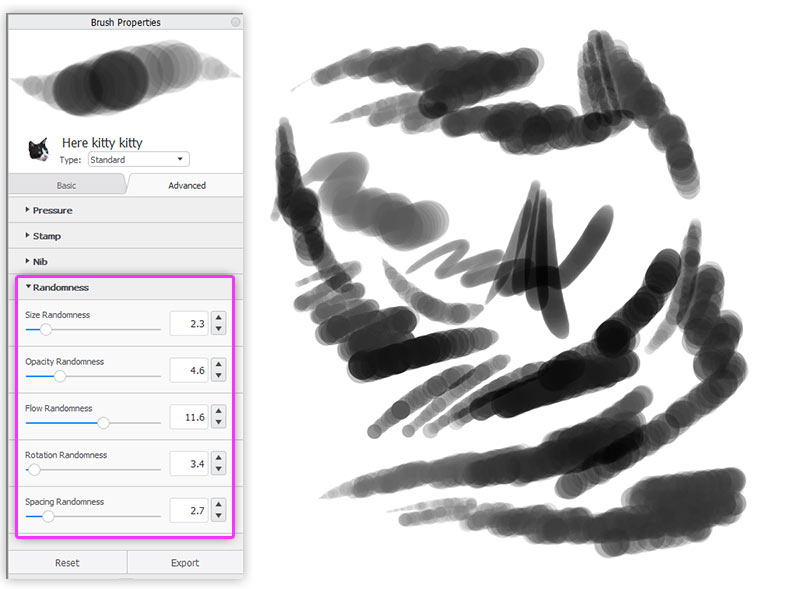
Castor Type
But that's not all! On peak you accept a special card, where yous can ready the type of the brush. You can choose from the Blend Modes that you may know from Photoshop, but there's something extra here. The first eight positions ascertain how the strokes interact with each other.
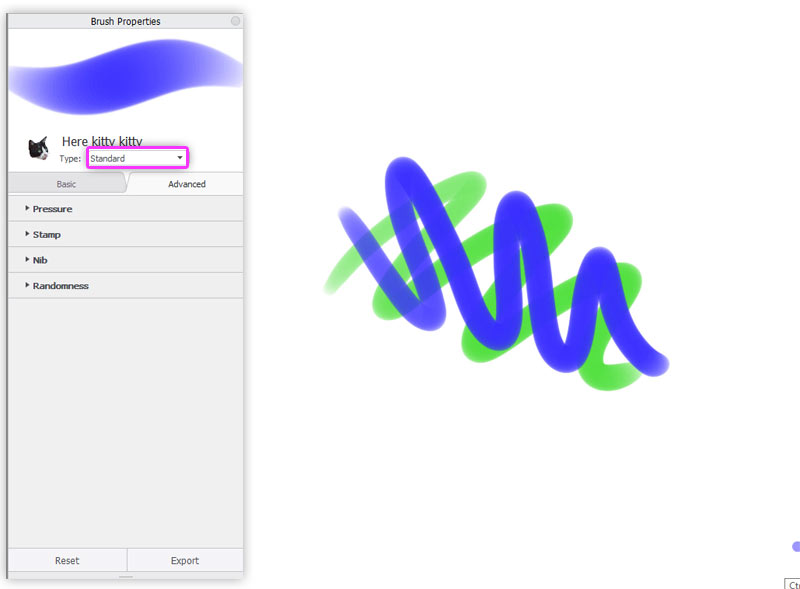
Standard
In the Standard way, the strokes cover each other according to the Opacity you take set for them. This is very predictable and useful, but too purely digital. If you lot're used to traditional tools, yous may exist more interested in the other types.
Marker
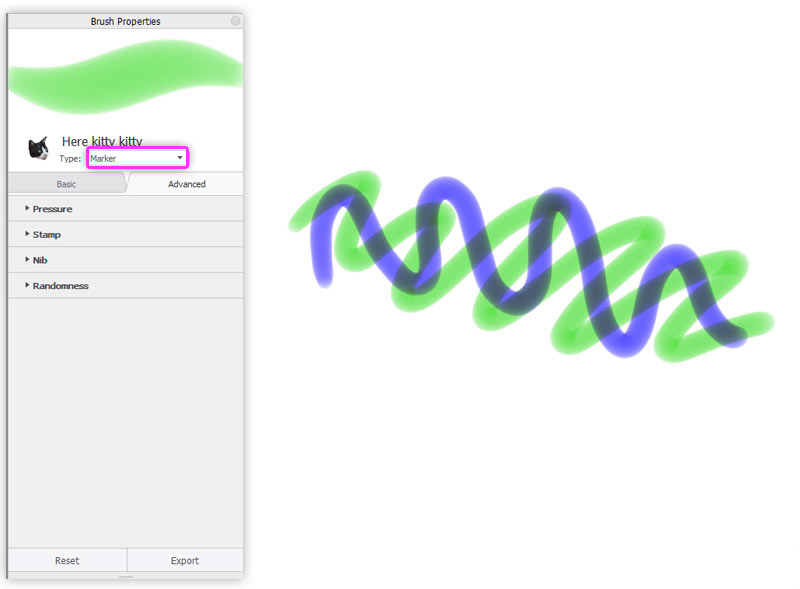
If y'all have ever used markers like Copics, you know that they have this special way of blending: they don't cover each other, but they rather mix in a specific way. And you tin can't make a dark line brighter by drawing with bright colour over it. And then that'due south exactly how the Marker mode works. Information technology's perfect in combination with the default Copic colour library available in SketchBook!
Smudge
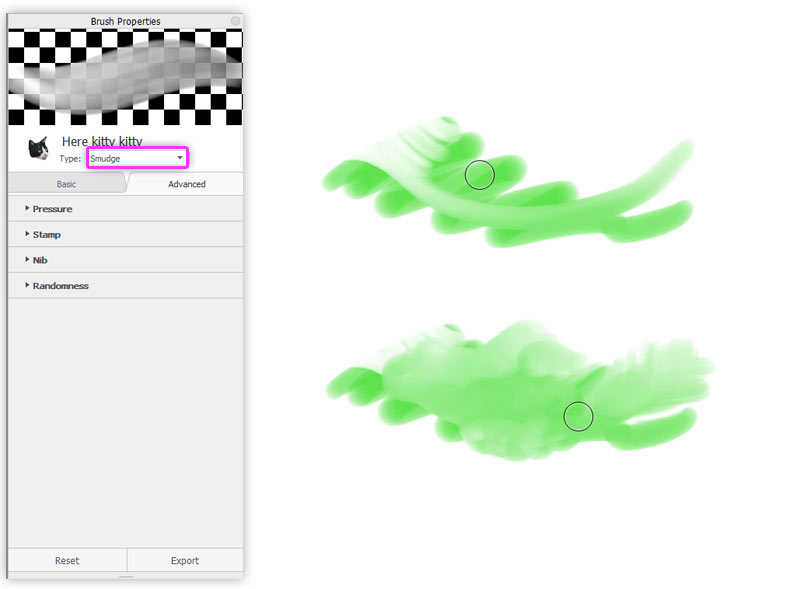
The Smudge fashion makes it possible to smudge the contents of the layer. You tin use information technology for strong blending, or for creating an illusion of fluffy fur. If it's too string for y'all, try Colorless mode instead.
Glow
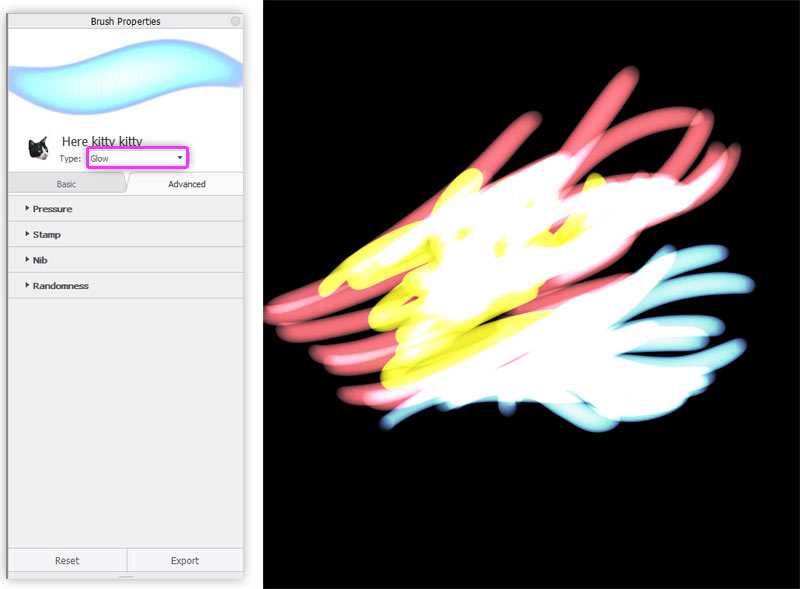
The Glow way adds some magic to your brush. Information technology brightness the strokes very finer, so it can exist perfect for painting fire, glowing eyes, or magical effects.
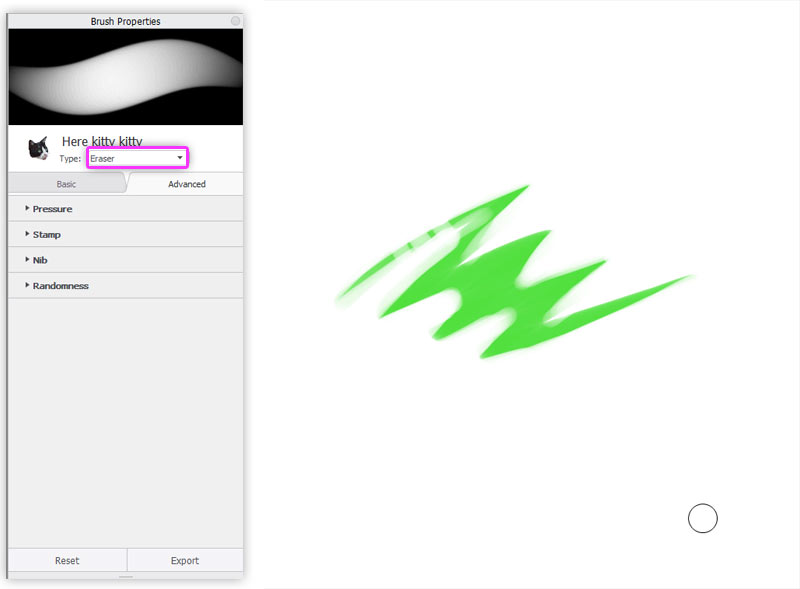
Eraser
With the Eraser mode y'all can turn every brush into an eraser. Information technology may non sound very interesting, simply retrieve of it this mode—in digital art, the eraser is an anti-brush, a brush that paints the lines abroad. It has mode more than uses than but removing mistakes!
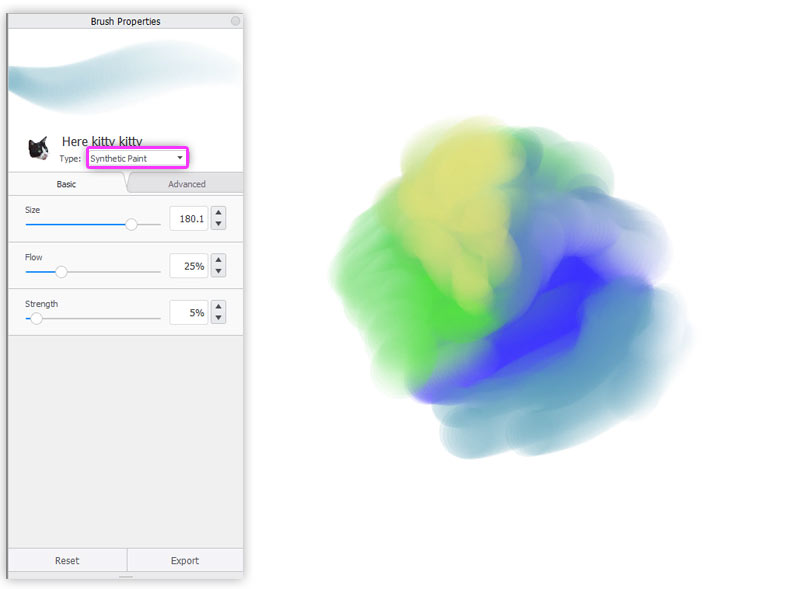
Synthetic Paint
If you lot're familiar with traditional painting, you'll dearest the Synthetic Paint fashion. It blends the strokes automatically as yous paint, creating a overnice, natural effect, and saving y'all time. Pay attention to the Force slider that appeared in the basic settings—it allows you lot to define how "wet" the canvas is.
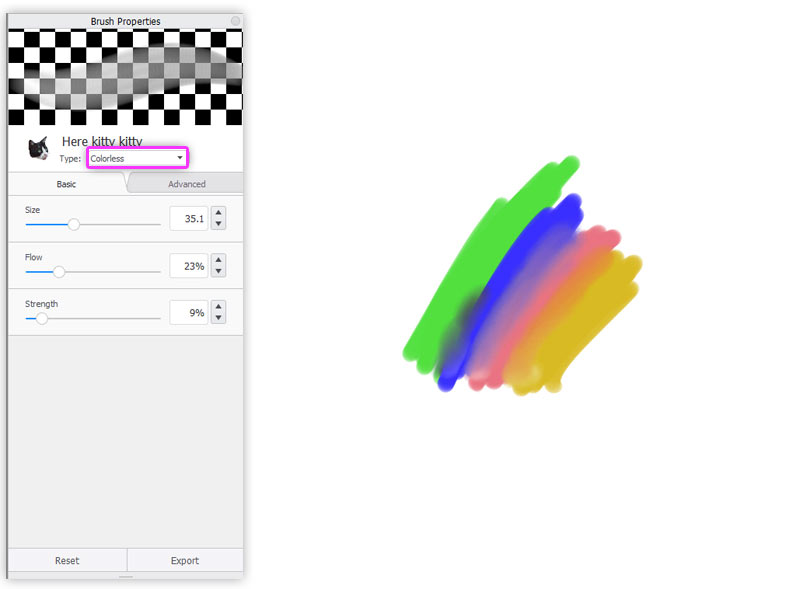
Colorless
The Colorless mode has been designed for blending of all types. Y'all tin can utilise it similar a blending stump that works for every medium, fifty-fifty oil paint. It works like a softer version of the Smudge mode.
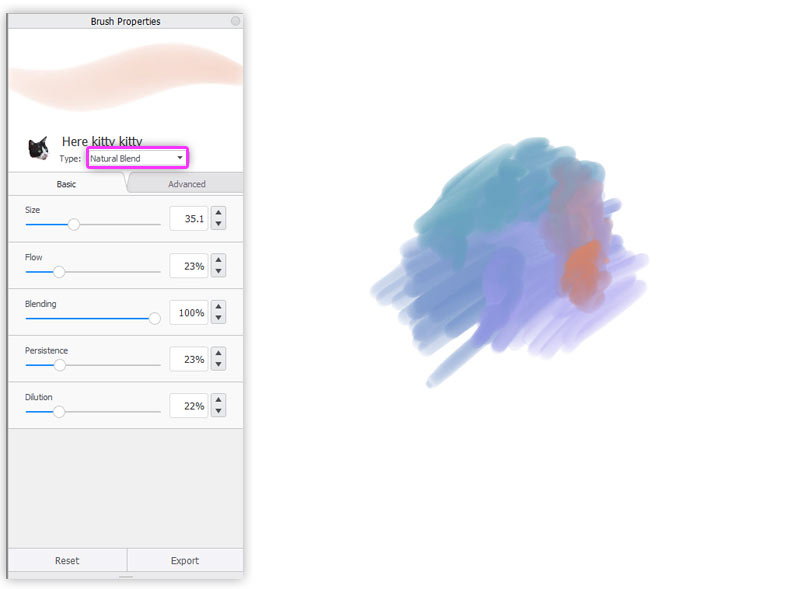
Natural Blend
The Natural Blend fashion is perfect for creating pastels. It combines soft and hard blending characteristic for this medium. But considering it has iii additional sliders to play with, yous can use this mode to create other interesting brushes, also!
What Are Layers For?
In digital art you tin create divide layers in the artwork. This means that you can describe over the lines, or nether the lines, or remove some lines without affecting the others. You lot can create new layers, remove them, copy them, merge them, and go along them in folders. Each layer is similar a transparent foil that y'all tin draw on.
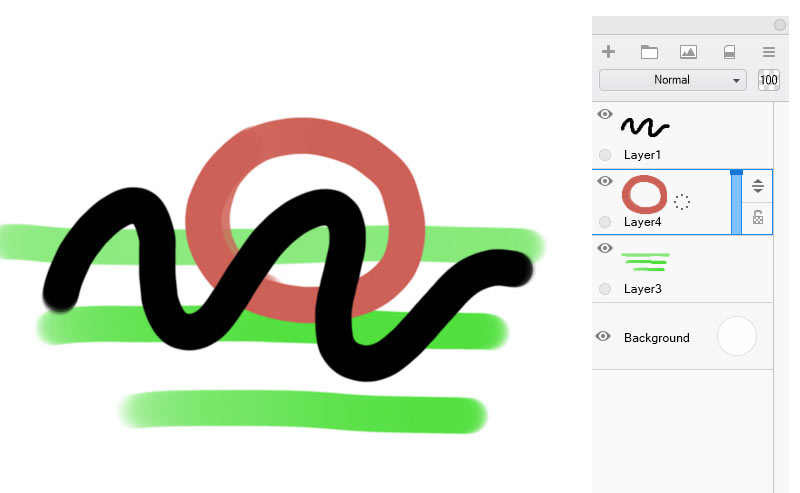
Although it may be tempting the create a lot of layers, endeavour to limit yourself to only a few. First, for practical reasons—every layer is like a copy of the image size, so it tin slow your calculator down. Second, your strokes tin only collaborate with each other if they're on the same layer. And so you tin't blend or smudge colors from ii different layers, and that can make the whole drawing look purely digital and unnatural.
It's best to use layers for different stages of the artwork. For example, I usually apply separate layers for the basic sketch, then for a more detailed sketch, for colors, for shadows, for smooth, and for the background. If I want to experiment, I duplicate a layer for a while to keep the original intact. In the terminal stage I oft merge all the layers to work on them together.
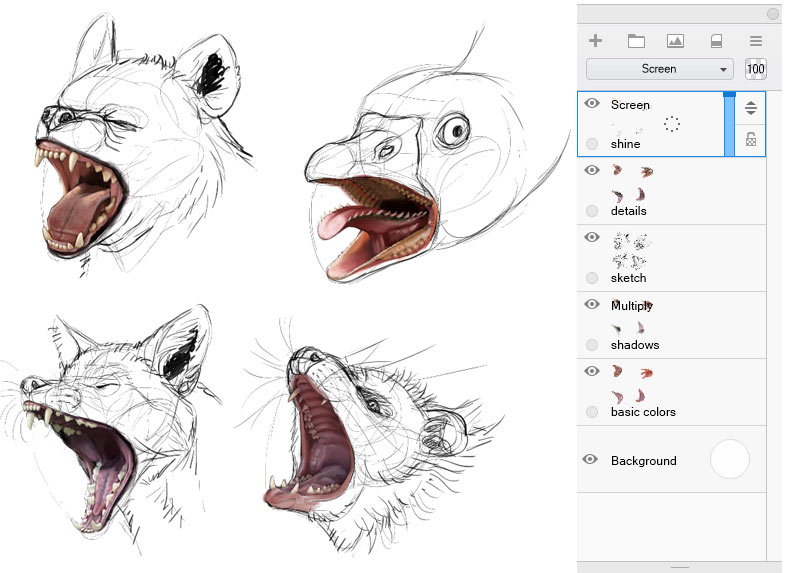
Blend Modes
Each layer has a Blend Style that defines how it interacts with the layers below. Most of the fourth dimension, the Normal fashion volition be all y'all need, but other mode can be quite handy at times. Let me evidence you a quick overview of the well-nigh useful ones.
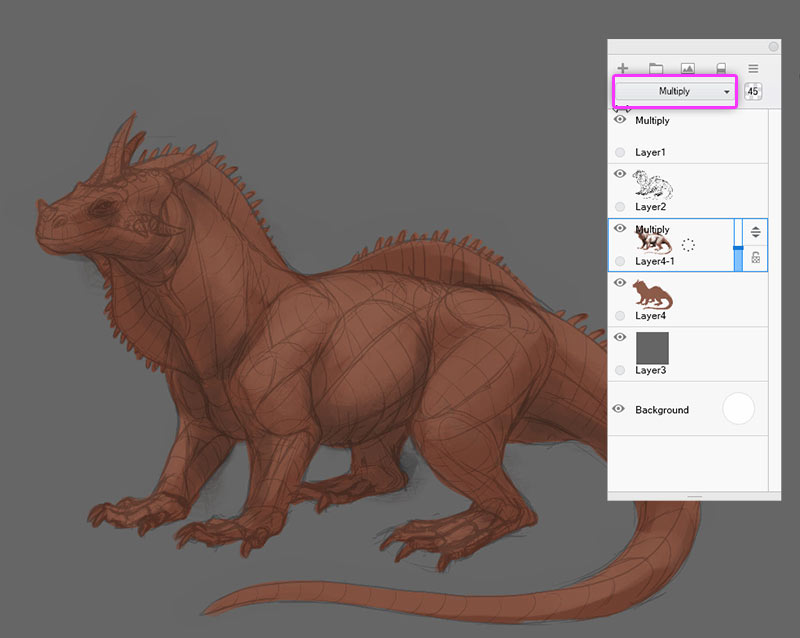
Multiply
Mutliply is perfect for calculation shadows. It darkens the colors beneath—the darker the color you lot pigment with, the stronger the darkening effect. If you lot pigment with white, though, information technology will remove the concealment effect. So you lot can, for example, fill the whole layer with a nighttime color, and and so paint the shadows away by painting with white. And because you're painting on a separate layer, the colors below are not really modified at all!
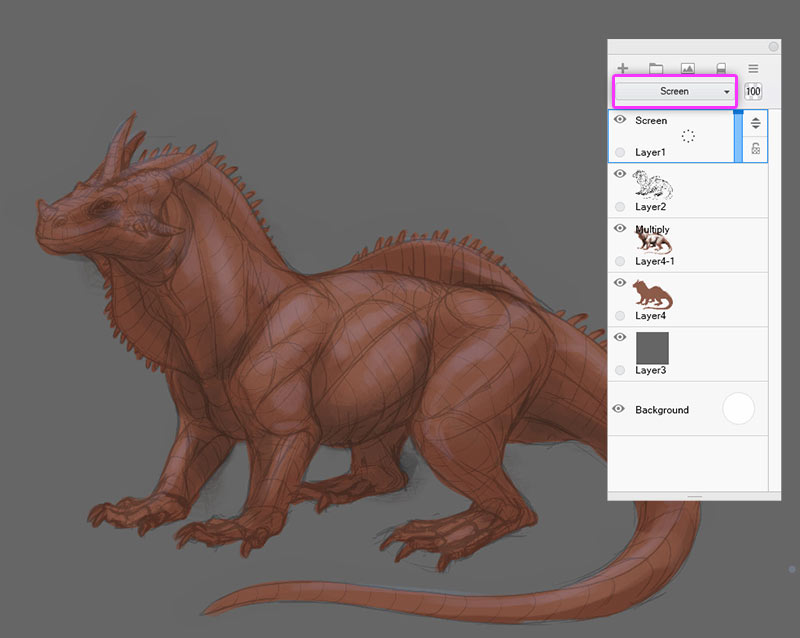
Screen
The Screen mode works just the other fashion around. Whatsoever you paint with, information technology will brighten the colors below. Black, on the other hand, volition remove this effect. It's perfect for adding smoothen!
Overlay
Overlay is like is like a hybrid of these two. If your color is night, it has a darkening effect, if information technology's bright—a brightening effect. Information technology results in more than vibrant colors than those of Multiply and Screen, and so it allows you to create more colorful shadows and smooth. If it'due south too intense, Soft Low-cal works like a softer version of Overlay.
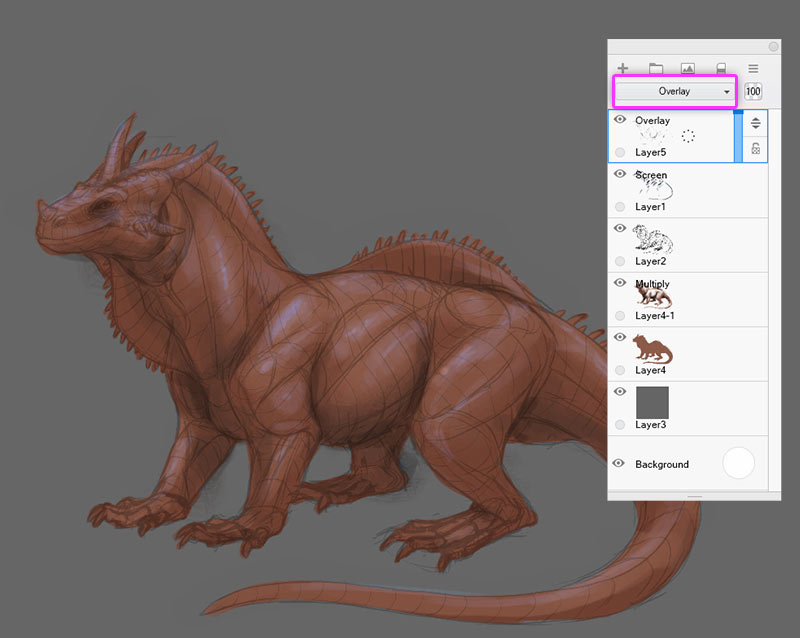
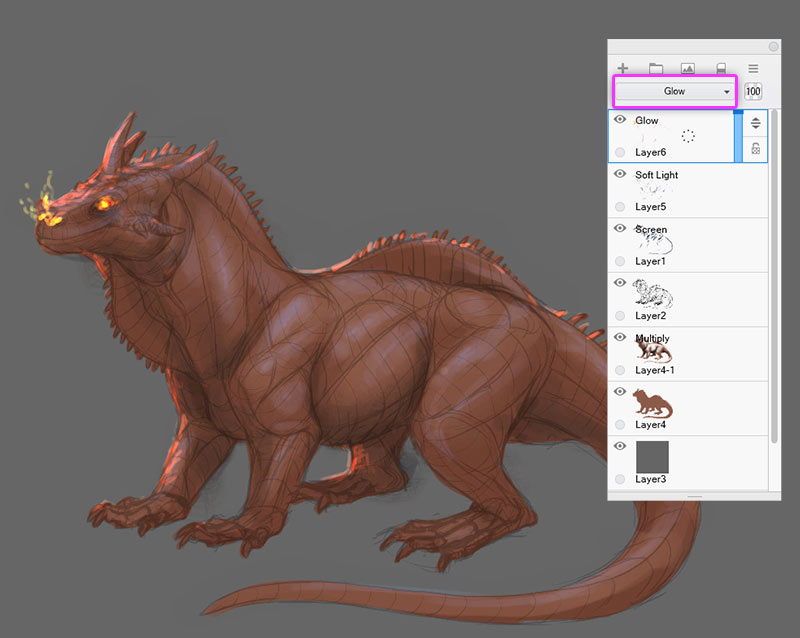
Glow
Glow is a truly magical style. It brightens the colors vibrantly, much stronger than the Overlay mode. The brighter the colors below, the stronger it works. It's perfect for painting subsurface handful, vibrant rim light, or magical effects.
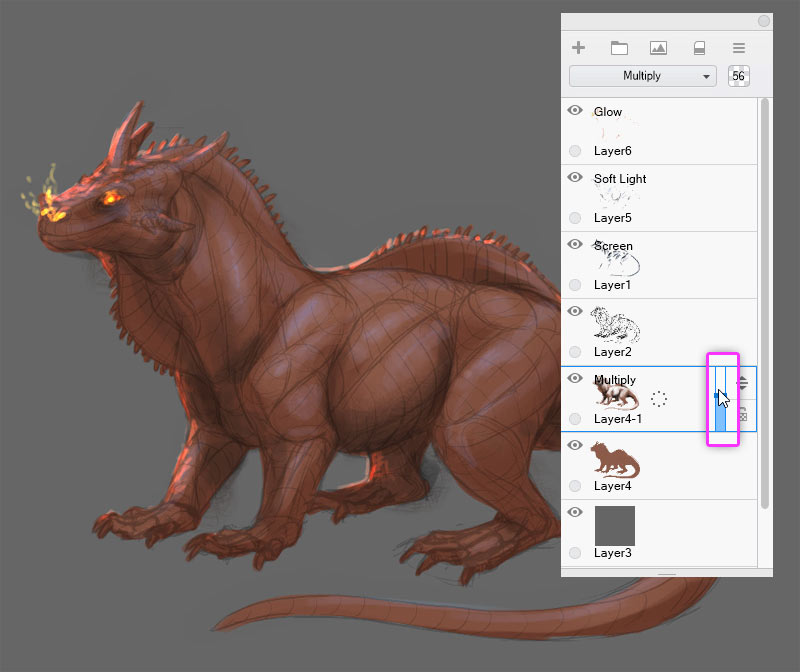
Opacity
Regardless of what way you utilize, y'all can control its intensity by dragging the Opacity slider.
What Can You Do With the Drawing?
In digital art you can modify the drawing in a few cool ways. Kickoff, you tin select a part of the drawing and movement information technology somewhere else, rotate it, or resize it—perfect, if you noticed the head is too big or too small, or too far from the body. Y'all can besides copy or remove the selected expanse.
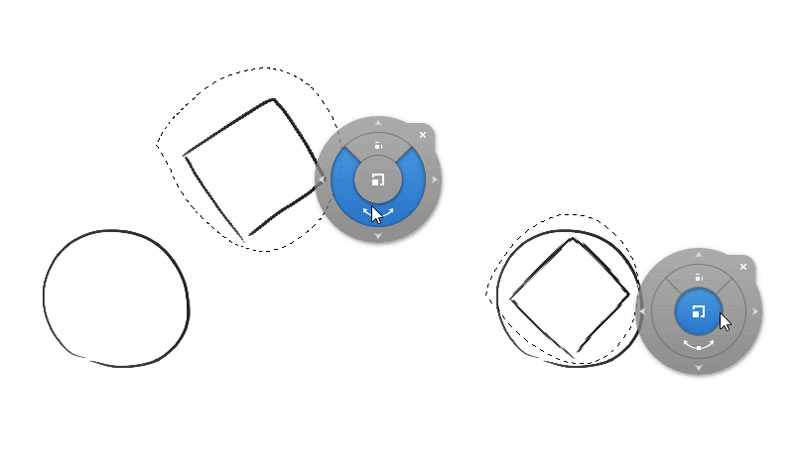
Second, you tin can skew the drawing—get in longer, wider, or even change its perspective. It can be useful if yous want to place a grass texture on the ground and brand information technology follow the perspective of the pic.
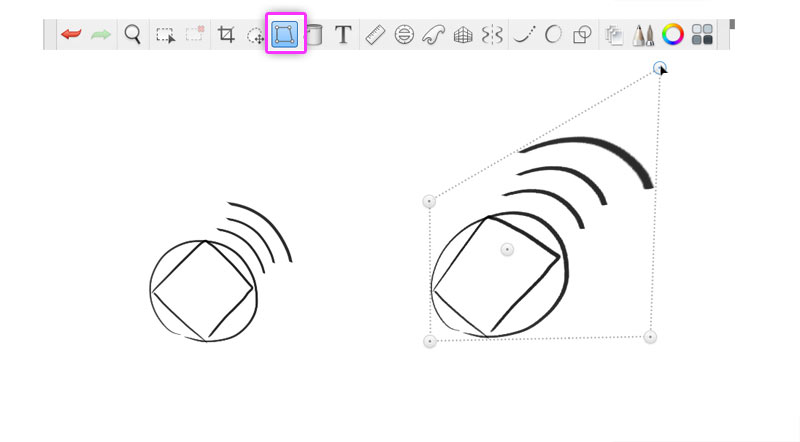
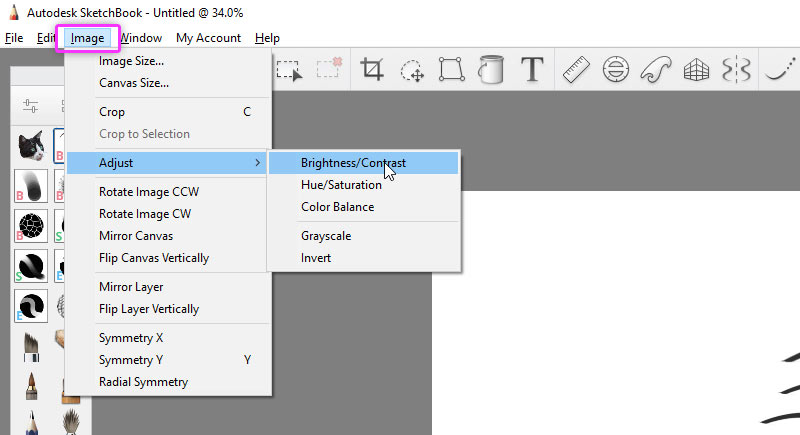
Third, you tin mirror or rotate the image at any bespeak—either a unmarried layer, or the whole canvas at once. You tin also crop the paradigm but remember—yous tin can't go back!
Additionally, SketchBook has a few color adjustments that y'all tin can employ to make the colors more vibrant, or increment the contrast, or remove the colors.
How to Keep Your Work Condom?
In traditional art, your drawing is material—you can touch information technology, you can take it with yous, and it can be destroyed, but it can't just disappear. Digital artwork, on the other hand, is only being displayed by your computer. This means a few things.
When you lot draw digitally, the lines announced on your screen, just they're not really there—they're only being displayed, and they're temporary. If you want to save these lines for later, you demand to tell your programme to turn your cartoon into a digital file. This may be obvious to you, simply here'due south why I'm talking most information technology: you need to be aware that if your computer turns off during your piece of work, y'all lose everything you take drawn since the last salve. That's why you need to brand a habit of pressing Control-S every time y'all depict something yous would detest to lose.
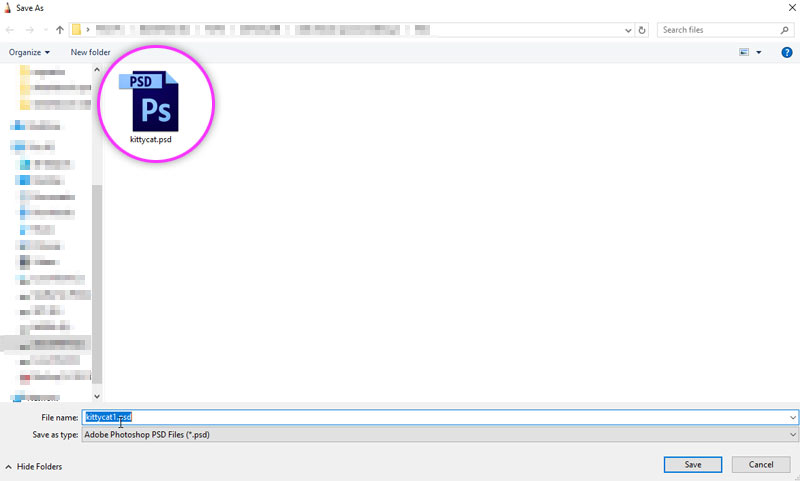
It's hard to believe that all your work is stored here!
Second, your file can become corrupted. It happens when your reckoner turns off during saving, but there are also other accidents yous tin't foresee. That'southward why it'due south good to create copies of your artwork. In SketchBook it'south very easy—every once in a while, press Control-Shift-S instead of Control-South. Your filename will get a assigned a number and you'll exist drawing in a split up copy from at present on.
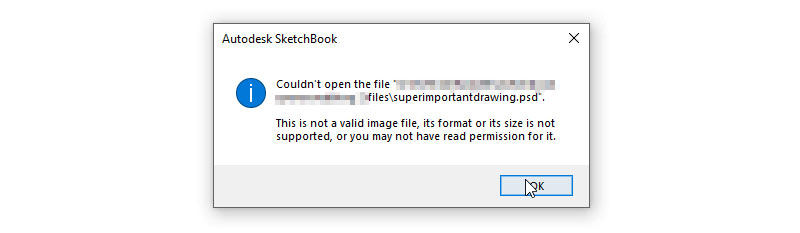
What a terrifying message! Luckily, we have a lot of backup copies available. Or do we?
But your artwork files are saved on the disk, and what if the disk breaks? Your drawings will be lost forever! That'southward why it's good to create regular backups of your fine art folder. You can apply a deject service (Google Drive, Dropbox), or just ship the files to another disk in your home.
I know I may sound overly conscientious, but I have lost a couple of drawings in the by by beingness too optimistic. If you can avoid it so easily, it'south not worth taking the risk.
That'southward All!
These are all the basic things that I wish I knew when I kickoff started using digital art programs. We've but scratched the surface of digital fine art, but with this knowledge information technology volition be much easier for you to understand everything equally yous go. Adjacent time nosotros're going to look into painting 3D objects by understanding calorie-free and shadow.
Check out other parts of this series:
- Basics of Digital Shading
- Colour and Materials
aroncorephrearm1992.blogspot.com
Source: https://monikazagrobelna.com/2019/09/23/digital-drawing-for-beginners-what-you-need-to-know-before-you-start/
0 Response to "Do You Need to Know How to Draw Traditionally to Do Digital Art"
Postar um comentário